What Is Digital Waste Tracking? A Guide for UK Waste Site Operators
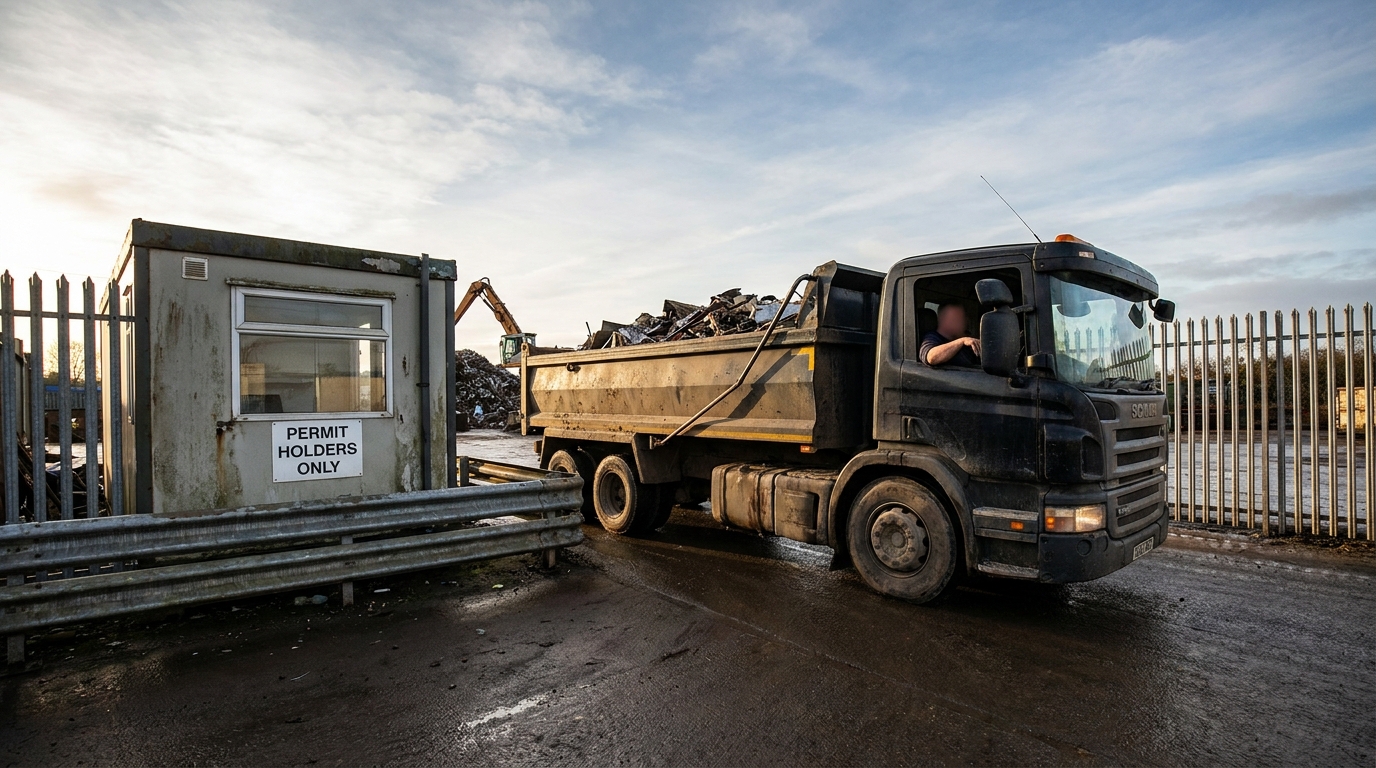
If you run a permitted waste site, you have probably heard "digital waste tracking" from your consultant, at an EA visit, or in every trade email since spring. What you may not have is a plain answer to what it actually is - and whether it changes what happens at your gate.
Here is the short version. Digital waste tracking is a new government service that records waste movements online, and from 1 October 2026 permitted sites that receive waste in England and Wales must use it; Scotland and Northern Ireland follow in January 2027 (GOV.UK). It is being brought in to tackle waste crime, which "costs the UK economy around £1 billion each year" (GOV.UK).
This guide defines the term the way an operator needs it: what the service is, when it starts for your nation, who is in, what you record, and what stays on paper.
Key takeaways
- Digital waste tracking is a single online service for recording waste movements; over time it will carry the information now kept on paper waste transfer notes and hazardous waste consignment notes (GOV.UK).
- It becomes mandatory for permitted waste-receiving sites in England and Wales from October 2026, and in Scotland and Northern Ireland from January 2027 (GOV.UK).
- Phase 1 is receiving sites only. Waste exemptions "are not included in phase 1", and waste collectors join "from October 2027" (GOV.UK).
- You record details of every load you receive and submit each record within 2 working days (GOV.UK).
- It does not switch off your paperwork - waste transfer notes, Annex VII forms, hazardous consignment notes and permit returns all continue (GOV.UK).
What is digital waste tracking?
Answer first: digital waste tracking is a government-run online service that records the movement of waste from where it is produced to where it ends up, replacing the current paper-based system. Defra describes it as a shift "away from the current largely paper-based, outdated and overly bureaucratic system" that keeps "a clear, near real-time record of where waste goes at every stage of its journey" (Defra, 2026).
In practice, instead of a duty-of-care paper trail that only the two parties to each transfer can see, the same core information - what the waste is, how much, its EWC code, who moved it and where it went - goes into one national system the regulators can see. For your site, "digital waste tracking" (often shortened to DWTS, or just "waste tracking") means one thing above all: every load you take in has to be logged online, not just written on a ticket.
If your gate team is still shaky on the codes that go into that record, our guide to what an EWC code is covers the six-digit List of Waste code the service asks for.
Why is it being introduced?
In short: to make waste crime harder to hide. Waste crime "costs the UK economy around £1 billion each year" (GOV.UK). A fragmented paper system makes it easy for rogue operators to fly-tip, mis-describe or illegally export waste without a trail, and a single digital record closes that gap.
The scale is real. Phase 1 alone "will apply to around 12,000 permitted waste receiving sites" (Defra, 2026), with "more than 100,000 operators set to be in scope" as the service expands (Defra, 2026). For an honest operator, the upside is a cleaner, level playing field - the sites cutting corners are the ones the system is built to catch.
When does it start for my site?
Answer first: it depends on your nation, and this is the point most guidance gets wrong. The service is mandatory "from October 2026" for "receiving site operators in Wales and England". Scotland and Northern Ireland come later - the same guidance sets "January 2027" for their "receiving site operators" (GOV.UK).
Note the Northern Ireland date. Some early coverage listed it with England and Wales in October 2026, but it was deferred to sit with Scotland in January 2027 - so if you run a yard in Northern Ireland, your clock matches Scotland's, not England's. The public beta has been open since 28 April 2026, when permitted operators were "encouraged to start using the new digital service" (Environment Agency, 2026), so you can practise on real loads now, with no penalty for learning the ropes.
Whichever nation you are in, the readiness steps are the same. Our DWTS readiness checklist for permitted waste sites works through them in order.
Who has to use digital waste tracking?
The test in Phase 1 is simple. If you are "licensed or permitted to receive controlled waste, you will need to enter details of every load you receive" (GOV.UK). That means transfer stations, scrap yards, ATFs, landfills, and treatment and composting sites - the permitted receivers.
Who is not in Phase 1 matters just as much, because overstating the scope is how sites waste money early:
- Waste exemption holders - exemptions "are not included in phase 1, as this phase only applies to permitted sites that receive waste" (GOV.UK).
- Waste carriers, brokers and dealers - collectors are Phase 2, when the service becomes mandatory for waste collectors "from October 2027" (GOV.UK).
- Waste producers are not brought into Phase 1 either.
If your business both receives waste under a permit and carries it, the receiving duty is the one that starts first.
What do you have to record, and how?
The short answer: you enter "details of every load you receive" (GOV.UK) - in practice the EWC code, the weight, a clear description of the waste and who delivered it. You then submit each record "within 2 working days (excluding weekends and bank holidays), starting on the day after you receive the waste" (GOV.UK).
There are two approved ways to send that data. You can "send your data using Defra's receipt of waste template spreadsheet", or you can "connect your waste software to the API", where "your software provider will need to connect it to Defra's Receipt of Waste API" (GOV.UK). Both are compliant: the spreadsheet suits low volumes and one person doing the entry, while software suits higher throughput and more than one person at the gate.
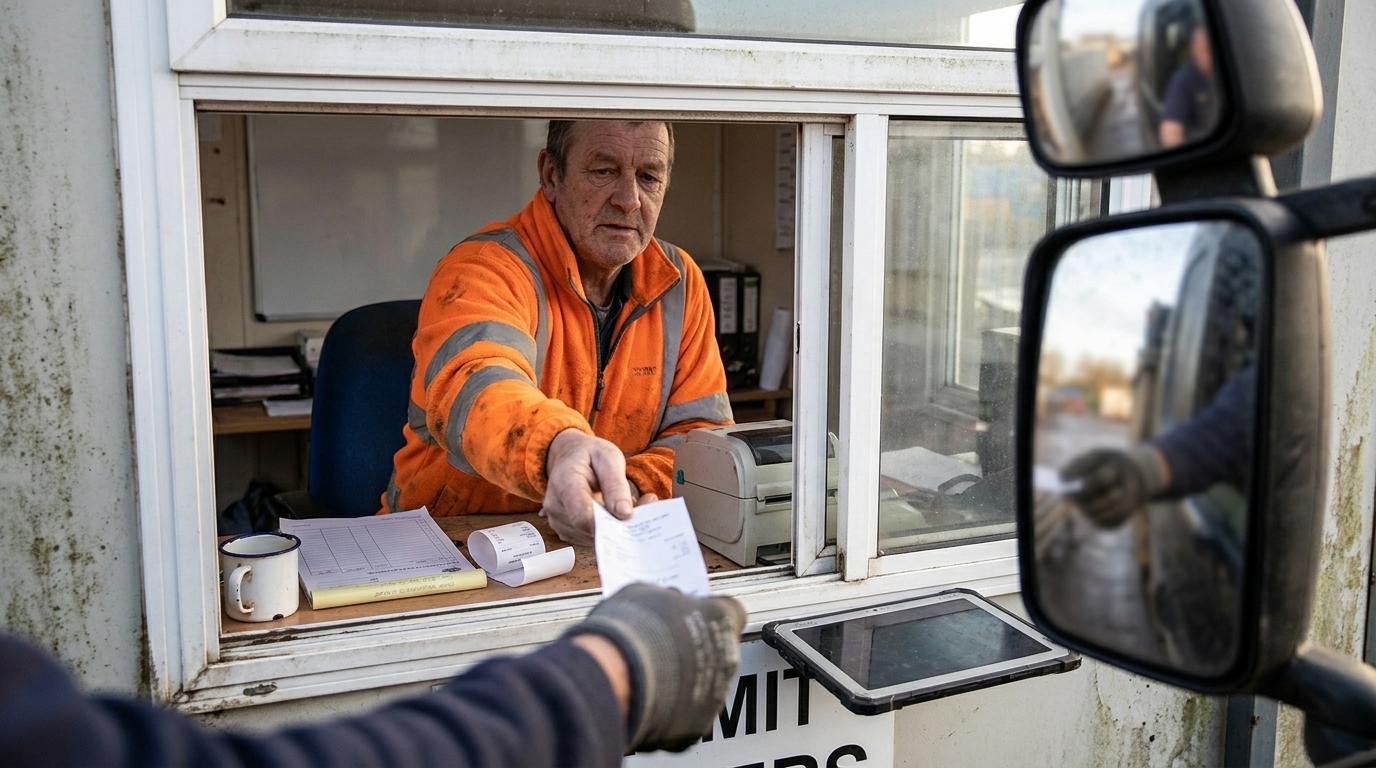
This is where the recording method earns its keep. Re-keying every weighbridge ticket into a spreadsheet inside the two-day window becomes the job nobody wants at month end; software built for the weighbridge can file each receipt to Defra as the load is weighed, so the clock never turns into a backlog. Either way, the record is only as good as the data agreed at the gate - get the code and the weight right at the point of receipt, not tidied up later.
Does it replace your paperwork?
Answer first, because it is the most mis-stated point of the whole mandate: no, not yet. Alongside the new service, "you must continue to complete waste transfer notes, Annex VII forms and hazardous waste consignment notes (where required)" (GOV.UK). Your permit returns carry on too - "you must continue to submit waste returns in line with the conditions of your environmental permit" (GOV.UK).
So for Phase 1, treat digital tracking as an addition to your duty-of-care paperwork, not a replacement for it. The long-term aim is for the service to carry "the information currently required on waste transfer notes and hazardous waste consignment notes" (GOV.UK), but that day has not arrived. Anyone telling you the paper stops on 1 October is wrong. Our answer on whether you still need paper waste transfer notes sets out exactly what stays on paper and what is now digital.
What happens if you get it wrong?
Straight answer: the enforcement ladder is not trivial. Getting it wrong can bring a "fixed monetary penalty of £1,000", a "variable monetary penalty of an unlimited amount", and, at the top, "criminal prosecution and, if convicted, an unlimited fine" (GOV.UK). Falsifying records is treated more seriously still: "you could also face up to 2 years in prison if you knowingly make false or misleading statements or records to regulators" (GOV.UK).
Retention matters too. If you are digitally excluded and keep a written record instead, you must "retain the written record for at least 3 years, starting on the date the record is made" (GOV.UK). A clean, complete trail is the cheapest insurance on the site.
Frequently asked questions
What is digital waste tracking in simple terms?
It is a government online service for recording waste movements from source to final destination, replacing a fragmented, largely paper-based system with "a clear, near real-time record of where waste goes at every stage of its journey" (Defra, 2026).
What does DWTS stand for?
It is the common shorthand for the digital waste tracking service - the Defra-run system permitted sites use to record the waste they receive.
When does digital waste tracking become mandatory?
For permitted receiving sites, "from October 2026" in England and Wales and from "January 2027" in Scotland and Northern Ireland (GOV.UK).
Does digital waste tracking apply to my site?
Yes, if you are "licensed or permitted to receive controlled waste" - you enter details of every load you receive (GOV.UK).
Are waste carriers and exemption holders included from October 2026?
No. Waste exemptions "are not included in phase 1", and waste collectors become mandatory "from October 2027" in Phase 2 (GOV.UK).
What do I have to record for each load?
"Details of every load you receive" (GOV.UK) - in practice the EWC code, the weight, a description of the waste and who delivered it.
How quickly do I have to submit each record?
"Within 2 working days (excluding weekends and bank holidays), starting on the day after you receive the waste" (GOV.UK).
Do I need software, or is the Defra spreadsheet enough?
Both are approved. You can use "Defra's receipt of waste template spreadsheet" or connect software through "Defra's Receipt of Waste API" (GOV.UK). The spreadsheet suits low volumes; software suits higher throughput and multiple users.
Does digital waste tracking replace paper waste transfer notes?
No. You must "continue to complete waste transfer notes, Annex VII forms and hazardous waste consignment notes (where required)" (GOV.UK).
What are the penalties for getting it wrong?
Enforcement runs from a "fixed monetary penalty of £1,000" to a "variable monetary penalty of an unlimited amount" and, at the top, "criminal prosecution and, if convicted, an unlimited fine" (GOV.UK).
Can I start using it now?
Yes. The service has been in public beta since "28 April 2026", when permitted operators were "encouraged to start using the new digital service" (Environment Agency, 2026). Practising before the deadline is the safest way to be ready.