Do UK Waste Transfer Stations Need to Comply with DWTS? (Answered)
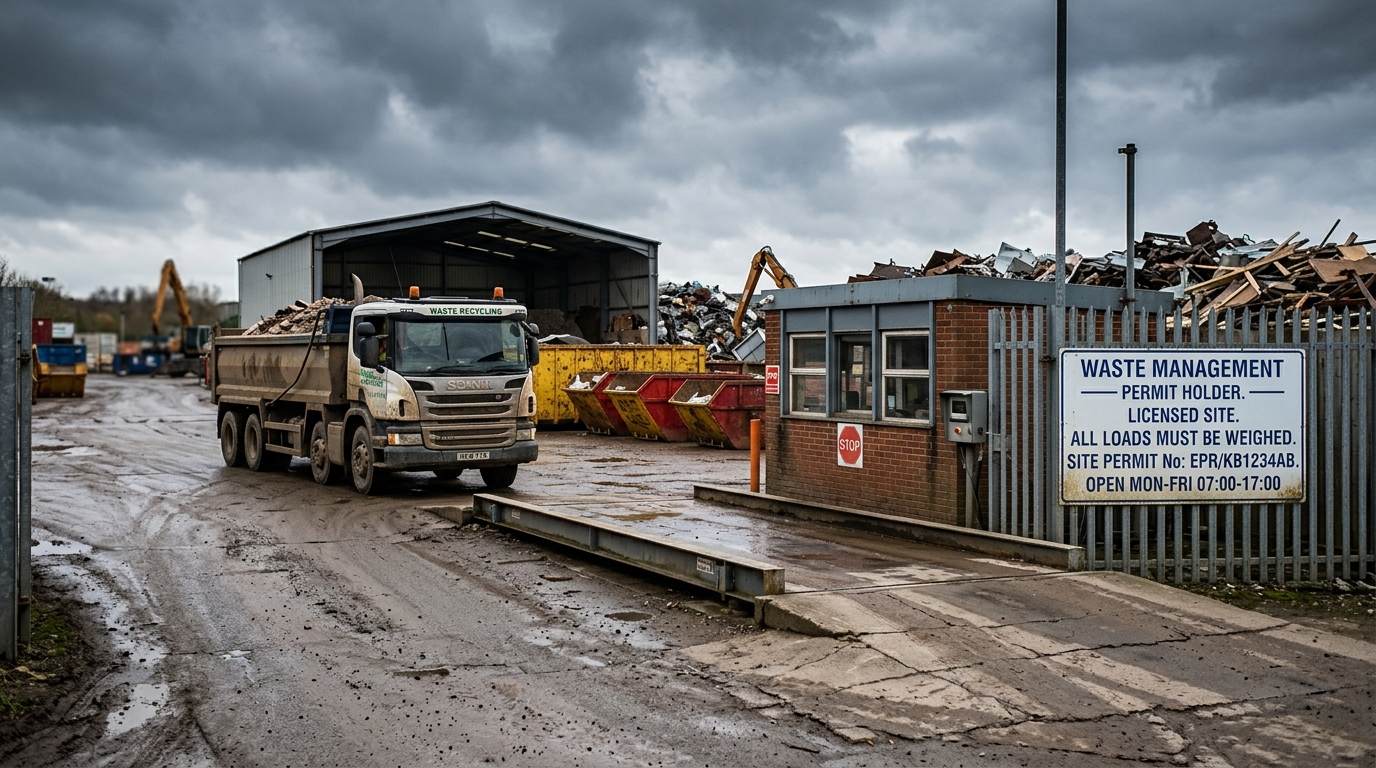
If you run a permitted waste transfer station in England or Wales, digital waste tracking becomes mandatory on 1 October 2026, and the question doing the rounds at every weighbridge is a simple one: does this actually apply to my site? The mandate lands on around 12,000 permitted waste receiving sites in Phase 1 (GOV.UK, 2026), and plenty of operators are still not sure whether they are one of them.
Here is the honest answer, up front, because you do not have time to wade through guidance to find it.
Yes. If you hold an environmental permit and receive controlled waste in England or Wales, your transfer station is in scope from 1 October 2026, and you must record every load you take in using the "Report receipt of waste" service. GOV.UK is direct: "If you are licensed or permitted to receive controlled waste, you will need to enter details of every load you receive" (GOV.UK, 2026). There is no small-site exemption. The rest of this page is the detail: who exactly is in, who is not, by when, and what "comply" actually means on the ground.
Key takeaways
- Permitted receivers are in Phase 1. If you are "licensed or permitted to receive controlled waste", you must "enter details of every load you receive" (GOV.UK, 2026).
- Your date depends on your nation. England and Wales from 1 October 2026; Scotland and Northern Ireland "from January 2027" (GOV.UK, 2026).
- You have a clock, not a gate. Records go in "within 2 working days (excluding weekends and bank holidays), starting on the day after you receive the waste" (GOV.UK, 2026).
- It is around 12,000 sites now. "Phase 1 will apply to around 12,000 permitted waste receiving sites" (GOV.UK, 2026); carriers, brokers and dealers follow in Phase 2 from October 2027.
- It costs £26 a year. "The service costs £26 per year for each organisation on your account" (GOV.UK, 2026), covering all that organisation's sites.
Does digital waste tracking apply to my waste transfer station?
If it holds an environmental permit and takes in controlled waste, yes. The Digital Waste Tracking (England) Regulations 2026 "come into force on 1st October 2026" (legislation.gov.uk, 2026), and the reporting duty falls on operators of permitted facilities that receive controlled waste. A "permitted facility" is a regulated facility carrying out a waste operation under an environmental permit, which is exactly what a licensed transfer station, scrap yard or authorised treatment facility is.
The trigger is the permit and the act of receiving, not your throughput or headcount. A single-site family transfer station that weighs in a handful of tippers a day is in scope on precisely the same date as a large materials recovery facility. Whether you are ready is a separate question, and the first move is understanding what the service is: our guide to what digital waste tracking is covers the "why" behind the duty before you touch the "how".
Who is in scope for Phase 1, and who is not?
Phase 1 is deliberately narrow. It is the permitted and licensed sites that receive waste, and nobody else yet. That matters, because plenty of businesses that touch waste are reading the deadline and assuming it is theirs when it is not.
In Phase 1 now (from your nation's date):
- Permitted waste transfer stations, scrap metal facilities, authorised treatment facilities and other permitted or licensed sites that receive controlled waste.
Not in Phase 1:
- Exemption-only sites. If you operate under a registered waste exemption rather than a permit, you are not in the receiving-site phase. Your date comes later.
- Waste producers. GOV.UK does not set a mandatory reporting date for producers at this stage; if you generate waste and hand it on, you have no digital tracking deadline yet.
- Carriers, brokers and dealers. These are Phase 2, "mandatory for waste carriers" from October 2027 (Environment Agency, 2026), around 300,000 registered operators. If your business both receives waste under a permit and carries it, the receiving duty is the one that lands first.
The scale tells the story. Phase 1 is a focused group of receivers; the service then widens until, in the government's words, "over 100,000 operators are set to be in scope" (GOV.UK, 2026).
When does my transfer station have to comply?
Your nation sets your date, and the single most common mistake is to fold the whole UK into "October 2026". It is not one date.
- England and Wales: 1 October 2026. "If you receive waste in England or Wales, you must use the service from 1 October 2026" (GOV.UK, 2026).
- Scotland and Northern Ireland: January 2027. The service is mandatory "for receiving site operators in Scotland and Northern Ireland" from January 2027 (GOV.UK, 2026). For Northern Ireland specifically, DAERA confirms digital waste tracking "will become mandatory in Northern Ireland from January 2027" (DAERA, 2026).
Northern Ireland was moved to align with Scotland, so if you have seen an older line grouping it with England and Wales in October, treat that as out of date. Check your own nation and diarise the right date.
What does "comply" actually mean at go-live?
Complying is narrower than the panic suggests. You are not rebuilding your yard. From your go-live date you record the receipt of every load you take in, using the "Report receipt of waste" service, and you get it in on time.
The timing is the part worth drilling into your team. You "must submit records within 2 working days (excluding weekends and bank holidays), starting on the day after you receive the waste" (GOV.UK, 2026). A load received on the Friday is due by the following Tuesday. It is a rolling habit, not an end-of-month scramble.
There are two ways in. GOV.UK sets out that "there are 2 ways you can report your receipt of waste: 1. Using an application programming interface (API). 2. Completing and uploading a spreadsheet" (GOV.UK, 2026). The spreadsheet is a genuine route for a low-volume site; the API is how software that already sits on your weighbridge files the receipt without anyone re-keying it. If your weighbridge already captures the load once, software built for the gate can file the digital receipt inside the two-day window while the paper ticket still prints for the driver. For the practical steps to get the gate ready, work through the DWTS readiness checklist, and if the weighbridge itself is your worry, the weighbridge workflow for DWTS covers the offline and queue questions directly.
Two myths worth killing before the deadline
"It will cost us a fortune." It will not. "The service costs £26 per year for each organisation on your account" (GOV.UK, 2026), and "the first payment is due by 31 January 2027" (GOV.UK, 2026). That £26 covers every waste-receiving site the organisation has. Any cost above that is your own choice about software, not a government charge.
"We will have to file at the gate and we lose signal." You will not have to. The two-working-day window exists precisely so a flaky portacabin connection or a queue of tippers does not stop you legally accepting or releasing a load. You capture the details when you weigh in and file the receipt within the window. The clock is generous on purpose.
Frequently asked questions
Does digital waste tracking apply to a small waste transfer station?
Yes, if it holds an environmental permit and receives controlled waste. GOV.UK states that if you are "licensed or permitted to receive controlled waste" you must "enter details of every load you receive" (GOV.UK, 2026). There is no small-site carve-out. A one-site permitted transfer station in England or Wales is in Phase 1 from 1 October 2026.
I only hold a waste exemption, not a permit. Am I in scope now?
Not in Phase 1. The receiving-site phase is for permitted and licensed sites. Registered exemption holders are not in this phase and their mandatory date sits later in the rollout. If you move from an exemption to a permit, you enter scope on the date that applies to permitted receivers in your nation.
When does it start in Scotland and Northern Ireland?
January 2027. The service is mandatory for receiving site operators in Scotland and Northern Ireland from January 2027 (GOV.UK, 2026), and DAERA confirms the same date for Northern Ireland (DAERA, 2026). Only England and Wales carry the 1 October 2026 date.
Does it apply to waste producers?
Not yet. GOV.UK does not set a mandatory reporting date for producers in Phase 1 (GOV.UK, 2026). Phase 1 is about the permitted sites that receive waste, so if you only produce it and hand it on you have no digital tracking deadline at this stage.
What exactly do I have to do for each load?
Record its receipt using the "Report receipt of waste" service, within 2 working days of the day after you receive it (GOV.UK, 2026). You do this by uploading a spreadsheet or through an API (GOV.UK, 2026).
Do I have to file it at the gate while the lorry waits?
No. You have two working days, so a dropped signal or a queue does not stop you accepting or releasing a load. Capture the details as you weigh in, file the receipt within the window.
Do I need software, or is the spreadsheet enough?
Both are valid. GOV.UK offers the spreadsheet upload or an API (GOV.UK, 2026). The spreadsheet suits a low-volume site; software that already lives on your weighbridge can file the receipt without double keying. Weigh it up on volume, not fear.
How much does it cost?
£26 per year for each organisation on your account, covering all that organisation's sites, with the first payment due by 31 January 2027 (GOV.UK, 2026). The "tens of thousands to comply" rumour is exactly that.
Does it replace my paper waste transfer notes?
No. GOV.UK states the paper method "will initially continue to run alongside the new digital service", so waste transfer notes, Annex VII forms and hazardous consignment notes carry on where required (GOV.UK, 2026). We cover this in full in do you still need paper waste transfer notes.
What happens if my site misses the deadline?
The Digital Waste Tracking (England) Regulations 2026 set "a fixed monetary penalty of £1,000" (legislation.gov.uk, 2026), alongside compliance notices, variable monetary penalties and, for the worst cases, prosecution. For a permitted site the greater risk is not one fixed penalty but the compliance record an inspector builds from repeated failures at each EA visit.
What about waste carriers, brokers and dealers?
They are Phase 2, mandatory from October 2027 (Environment Agency, 2026). If you both receive waste under a permit and carry it, the receiving duty lands first, in Phase 1.