The DWTS Readiness Checklist for Permitted Waste Sites
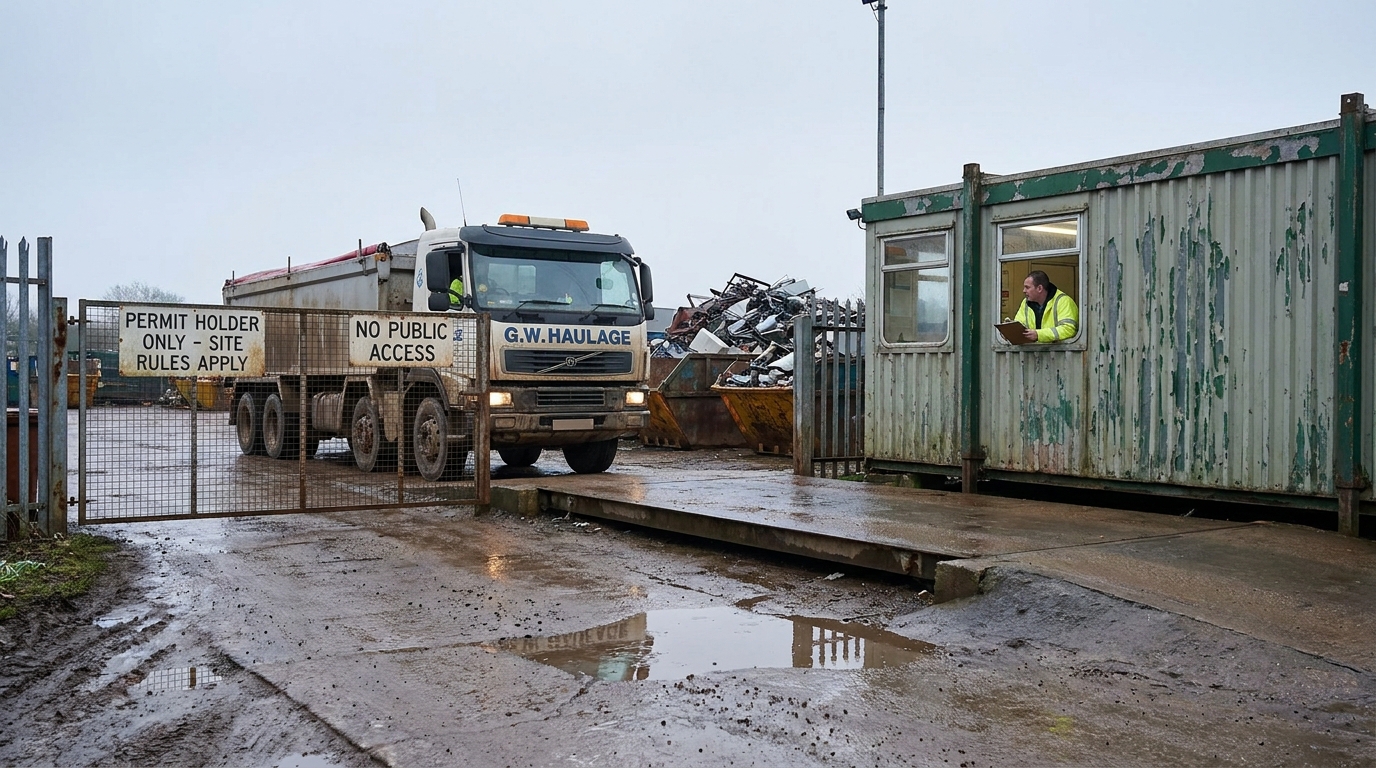
If you receive waste in England or Wales, you have under four weeks. From 1 October 2026, every load you take in has to be recorded digitally on the Digital Waste Tracking (DWTS) service (GOV.UK). Miss it and the enforcement ladder is not trivial - a fixed monetary penalty of £1,000, a variable monetary penalty of an unlimited amount, and, at the top, criminal prosecution and an unlimited fine (GOV.UK).
Most yards we speak to are stuck on the same two questions: do I actually need software, or will the Defra spreadsheet do? and what do I have to do differently on the weighbridge? This is the readiness checklist - the plain, tick-box version, with no pitch attached.
Here is the short answer before the detail: confirm your deadline for your nation, decide how you will record, get your gate data ready, set up the two-working-day routine, keep your paper running alongside, and sort your retention. Work through the six steps below.
Key takeaways
- England and Wales must use the service from 1 October 2026; Scotland and Northern Ireland follow in January 2027 (GOV.UK).
- It applies to you if you are licensed or permitted to receive controlled waste - you enter details of every load you receive (GOV.UK).
- You can report through the Defra spreadsheet template or through software via an API - both are valid (GOV.UK).
- Records must be submitted within 2 working days of receiving the waste (GOV.UK).
- DWTS does not replace your paperwork: waste transfer notes, consignment notes and permit waste returns all continue (GOV.UK).
Step 1: Confirm your digital waste tracking deadline
Answer first: if you hold a permit or licence to receive controlled waste, you are in Phase 1, and your date depends on your nation. The service is mandatory from October 2026 for receiving site operators in Wales and England, and from January 2027 for receiving site operators in Scotland and Northern Ireland (GOV.UK).
This is the point most guidance gets wrong, so check it against your own site. Northern Ireland is not an October 2026 date - it moves with Scotland in January 2027. If you run a yard in England or Wales, your clock is the short one.
Waste collectors and holders of waste exemptions are not in Phase 1. The service becomes mandatory for waste collectors "from October 2027", and "waste exemptions will be included in phase 2" (GOV.UK). If your site both receives under a permit and carries, the receiving duty is the one that starts in 2026.
Step 2: Decide how you will record - spreadsheet or software
Answer first: there are two approved routes, and neither is wrong. You can send your data using Defra's receipt of waste template spreadsheet, or you can connect your own system, where your software provider connects it to Defra's Receipt of Waste API (GOV.UK). The Environment Agency describes the same choice: record digitally "through either an application programming interface (API) linking directly to their waste management software, or through a simple to use spreadsheet" (Environment Agency, 2026).
So which one? Be honest about your volumes.
- The spreadsheet is enough if you take a handful of loads a day, one person does the entry, and you are comfortable downloading, filling and uploading a template inside the two-working-day window. It is free and it is compliant.
- Software pays off once the loads mount up, more than one person is at the gate, or re-keying every receipt from a weighbridge ticket into a spreadsheet becomes the job nobody wants at month end. The API files each receipt straight from your system.
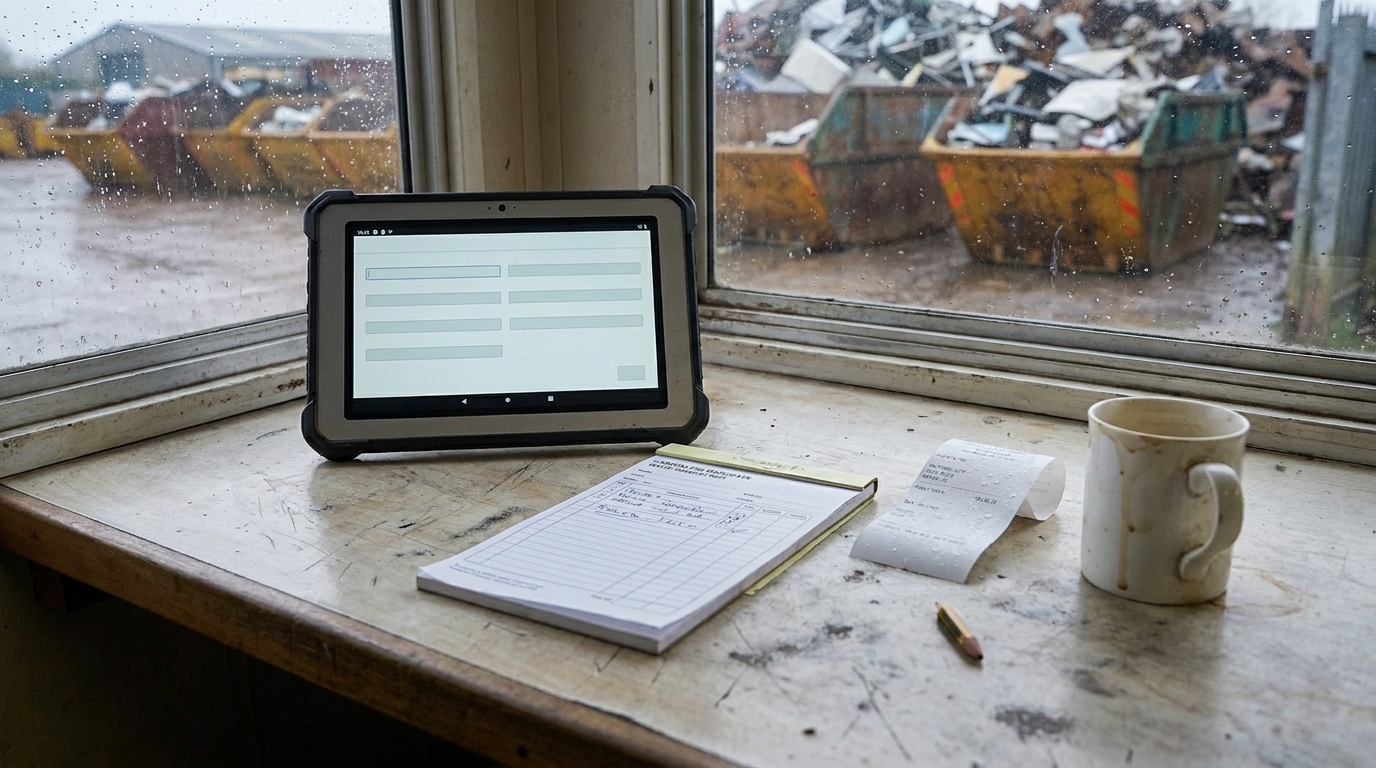
The public beta has been open since 28 April 2026, when permitted operators were "encouraged to start using the new digital service" (Environment Agency, 2026). Whichever route you pick, start entering real loads now while there is no penalty for getting the hang of it.
Step 3: Get your gate data submission-ready
Answer first: you "enter details of every load you receive" (GOV.UK), so the details you agree at the weighbridge are the ones that end up in the record. In practice that means the EWC code, the weight, a clear description of the waste and who delivered it - get them right at the point of receipt, not tidied up later.
The one that catches sites out is the code. Every receipt carries an EWC (List of Waste) code, and a wrong or lazy code follows the load into the digital record the same way it follows a paper transfer note. If your gate team is unsure how the six-digit code works, our guide to what an EWC code is walks through the asterisk, mirror entries and the 99 codes to avoid. Sort the coding habit before 1 October and the digital entry becomes a formality.
Step 4: Set up the two-working-day submission routine
Answer first: you do not report in real time, but you cannot let it slip either. You "must submit records within 2 working days (excluding weekends and bank holidays), starting on the day after you receive the waste" (GOV.UK).
Build that into a routine now, before it is enforced:
- Decide who submits - the weighbridge operator at the point of receipt, or the office each morning for yesterday's loads.
- Decide when - a fixed daily slot beats a Friday scramble, because the clock excludes weekends but does not stop.
- Decide what happens when the wifi drops in the portacabin, which it will - a fallback so loads are captured and filed inside the window.
This is where the recording method in Step 2 earns its keep. Software built for the weighbridge can file each receipt to Defra as the load is weighed, so the two-working-day clock never becomes a backlog.
Step 5: Keep your paper running - DWTS does not replace it
Answer first, because this is the most mis-stated point of the whole mandate: digital tracking does not switch your paperwork off. Alongside the new service, "you must continue to complete waste transfer notes, Annex VII forms and hazardous waste consignment notes (where required)" (GOV.UK).
Your permit returns carry on too: "you must continue to submit waste returns in line with the conditions of your environmental permit" (GOV.UK). For Phase 1, treat DWTS as an addition to your duty-of-care paperwork, not a replacement for it. Anyone telling you the paper stops on 1 October is wrong, and building your process around that would leave you non-compliant on the very documents an inspector still expects to see. If you are still unsure which forms carry on, our answer to whether you still need paper waste transfer notes under digital waste tracking sets out exactly what stays on paper and what is now digital.
Step 6: Sort retention and your audit trail
Answer first: keep your records, and keep them long enough. If you are digitally excluded and keep a written record instead, you must "retain the written record for at least 3 years, starting on the date the record is made" (GOV.UK).
Make sure whatever you use - spreadsheet folder or software - keeps a clean, searchable history you can put in front of the EA. The penalties for getting records wrong go beyond a late submission: knowingly making "false or misleading statements or records to regulators" can carry "up to 2 years in prison" (GOV.UK). An honest, complete trail is the cheapest insurance on the site.
Frequently asked questions
What is the DWTS deadline for my site?
England and Wales must use the service from 1 October 2026; Scotland and Northern Ireland from January 2027 (GOV.UK).
Does DWTS apply to my waste site?
Yes, if you are licensed or permitted to receive controlled waste - you enter details of every load you receive (GOV.UK).
Do I need software, or is the Defra spreadsheet enough?
Both are approved. You can use Defra's receipt of waste template spreadsheet or connect software through the Receipt of Waste API (GOV.UK). The spreadsheet suits low volumes; software suits higher throughput and multiple users.
How quickly do I have to submit each record?
Within 2 working days (excluding weekends and bank holidays), starting the day after you receive the waste (GOV.UK).
Does digital waste tracking replace paper waste transfer notes?
No. You must continue to complete waste transfer notes, Annex VII forms and hazardous waste consignment notes where required (GOV.UK).
Do I still submit my permit waste returns?
Yes. You "must continue to submit waste returns in line with the conditions of your environmental permit" (GOV.UK).
Are waste carriers and exemption holders included from October 2026?
No. Waste collectors are Phase 2, from October 2027, and waste exemptions "will be included in phase 2" (GOV.UK).
What happens if I miss the deadline or get it wrong?
Enforcement runs from a £1,000 fixed monetary penalty to a variable monetary penalty of an unlimited amount and, at the top, criminal prosecution and an unlimited fine (GOV.UK).
How long do I keep the records?
At least 3 years from the date each record is made, if you keep a written record as a digitally excluded operator (GOV.UK).
Can I start now?
Yes. The service has been in public beta since 28 April 2026, and operators were encouraged to start using it early (Environment Agency, 2026). Practising before the deadline is the safest way to be ready.