What Is an EWC Code? A Guide for UK Waste Site Operators
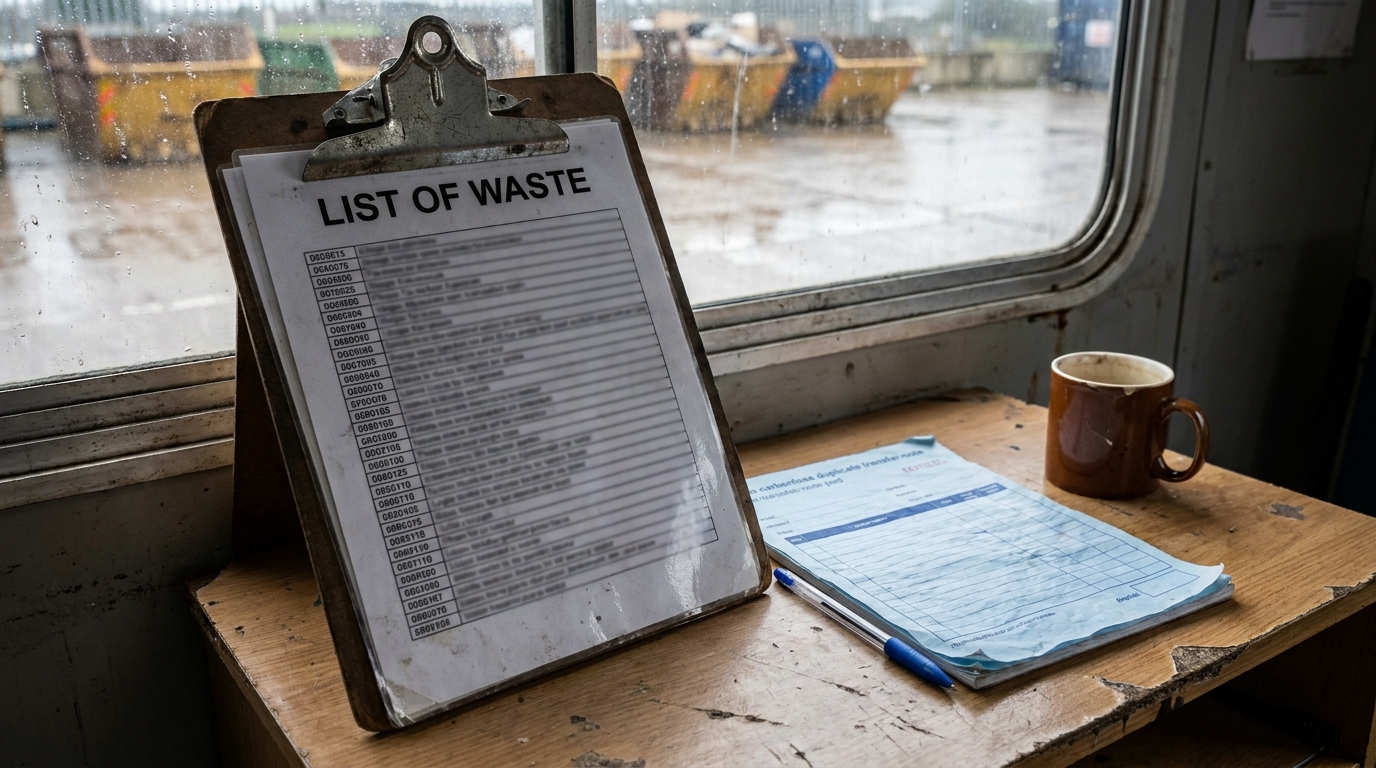
Every load that comes over your weighbridge needs a code. Get it right and it is a two-second job. Get it wrong on a mirror entry - the "is this hazardous or not?" call your operator makes at the gate - and the difference is real money. The standard rate of Landfill Tax is £130.75 a tonne from 1 April 2026, against £8.65 a tonne at the lower rate (GOV.UK, 2026). Misdescribe the waste and you can carry a £122-a-tonne error down the chain, and misdescription is exactly the kind of thing the EA looks for at an inspection.
So it pays to know what the code actually is.
What is an EWC code?
An EWC code - short for European Waste Catalogue code, now formally called a List of Waste (LoW) code - is the six-digit code that classifies a type of waste and shows whether it is hazardous. GOV.UK uses the terms interchangeably: it is "the waste classification code, also referred to as LoW (List of Waste) code or EWC (European Waste Catalogue) code" (GOV.UK).
You use it to describe every waste you receive, move or dispose of. The code drives the two decisions that matter on a permitted site: whether the waste is hazardous, and what has to go on the paperwork. In England, the code list has its legal basis in The List of Wastes (England) Regulations 2005 (legislation.gov.uk, 2005), and the method for assigning a code is set out in the Environment Agency's technical guidance, WM3 (Environment Agency, 2015).
Key takeaways
- An EWC code, now formally a List of Waste (LoW) code, is the six-digit code that classifies a waste and shows whether it is hazardous (GOV.UK).
- An asterisk (*) next to a code means the waste is hazardous (Environment Agency, 2015).
- A mirror entry is a waste that may be hazardous or non-hazardous - you cannot assign the code until you assess its hazardous properties (Environment Agency, 2015).
- The code follows the load: it goes on every waste transfer note and consignment note (GOV.UK).
- Get it wrong and the cost is real - £130.75 a tonne standard against £8.65 a tonne lower rate from 1 April 2026 (GOV.UK, 2026).
What does an EWC code look like?
An EWC code is six digits, built up from the List of Waste's chapter structure. WM3 explains it plainly: individual wastes are "given an additional two digit number, to create a six digit number with the chapter and subchapter numbers" (Environment Agency, 2015).
Read left to right:
- the first two digits are the chapter - broadly the industry or process the waste came from (for example, chapter 20 covers municipal wastes);
- the middle two digits are the sub-chapter, narrowing it down;
- the last two digits are the specific waste.
So 20 01 01 is paper and cardboard, sitting inside sub-chapter 20 01 (separately collected fractions) inside chapter 20. The description printed next to the code tells you its scope - the type of waste, the process that produced it, or its composition. The same material can carry different codes depending on where it came from, which is why the chapter you start in matters.
What does the asterisk (*) mean?
An asterisk means the waste is hazardous. WM3 states it directly: "The six-digit codes in the LoW that are hazardous wastes have an asterisk (*) next to them" (Environment Agency, 2015).
Some codes are hazardous no matter what - WM3 calls these absolute hazardous (AH) entries. If the waste fits the description, you assign the code and it is hazardous; you do not need to work out the chemistry first. Fuel oil and diesel (13 07 01*) is one example. The mirror on the other side is the absolute non-hazardous (AN) entry: always non-hazardous, no assessment needed.
The two that catch people out sit in between.
What is a mirror entry?
A mirror entry is a waste that could be hazardous or non-hazardous, listed as a pair of codes - one marked with an asterisk, one not. WM3 calls these mirror hazardous (MH) and mirror non-hazardous (MN) entries, and it is blunt about the duty they create: "If the waste is classified under 'mirror hazardous' or 'mirror non-hazardous' entries you will need to continue with the assessment of hazardous properties" (Environment Agency, 2015).
You cannot guess. The guidance is explicit that "a list of waste code cannot be assigned until steps 4 to 7 have been completed" - the steps where you assess the hazardous properties (Environment Agency, 2015). And where the composition genuinely cannot be determined, the waste "must be classified under the 'mirror hazardous' entry" - the safe default is hazardous, not the cheaper option.
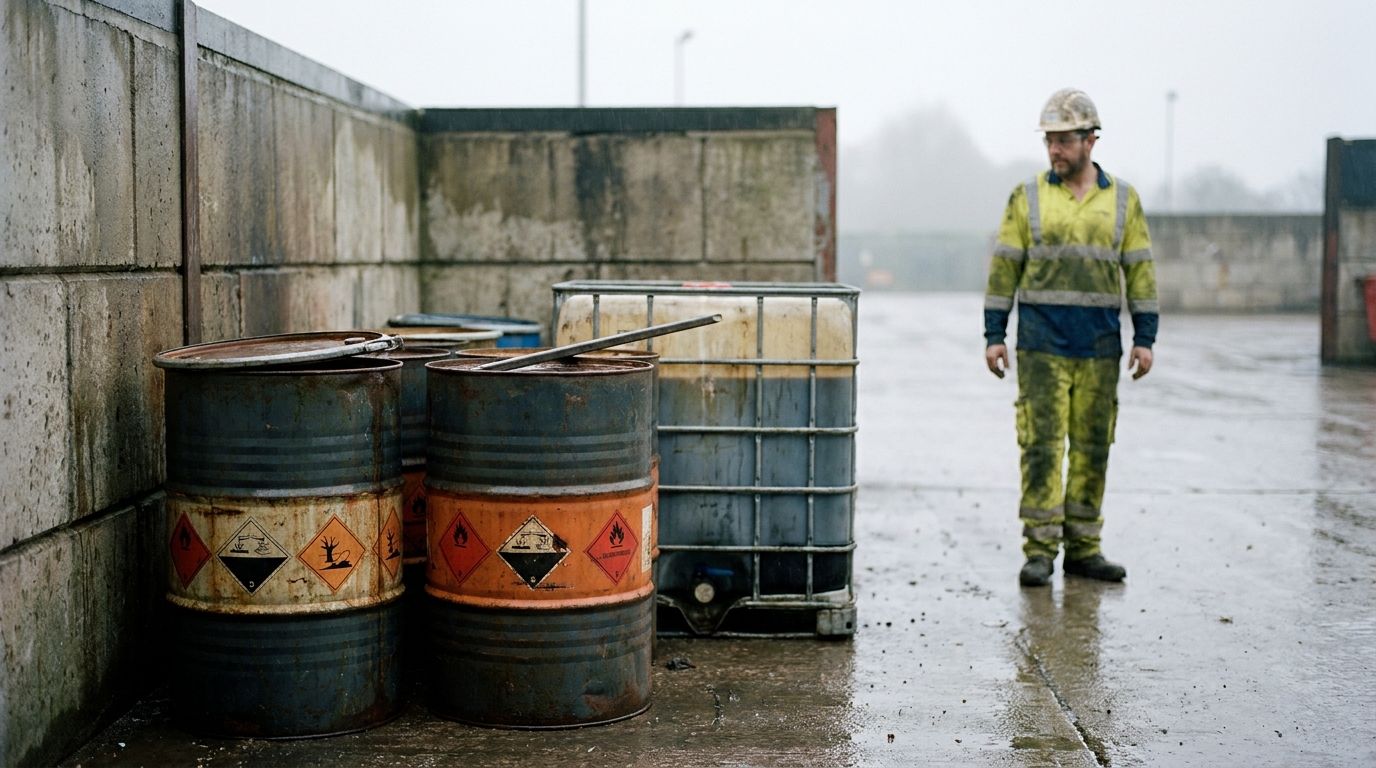
This is the load your operator flags into the quarantine bay - contaminated soil, mixed oils, a drum with no paperwork. The mirror entry is where the real classification work, and the real risk, lives.
What about codes ending in 99?
Codes ending in 99 mean "wastes not otherwise specified". They are a last resort, not a shortcut. WM3 tells you to exhaust the more specific chapters first: "You must not use any six digit entry ending in '99' from the chapters considered at step 1 because more appropriate entries might be found in other chapters" (Environment Agency, 2015).
Only after you have checked chapters 01-12 and 17-20, then 13-15, then 16, can you fall back on a 99 code - and even then, "you should still use the 'most appropriate' code, so shouldn't use a 99 code if a more suitable alternative is available in another chapter of the LoW" (Environment Agency, 2015). A yard that codes everything awkward as 99 is a yard that will get questions at its next visit.
How do I find the right EWC code?
Work through it in order rather than searching for a code that sounds close:
- Start with the source. Identify the process or activity that produced the waste and go to that chapter (01-12, 17-20).
- Narrow to the sub-chapter, then the entry. Match the printed description, not just the material name.
- Check the entry type. Absolute hazardous, absolute non-hazardous, or a mirror pair.
- Assess mirror entries. If it is a mirror, complete the hazardous-properties assessment before you commit to a code.
- Only then consider a 99 code if nothing specific fits anywhere in the list.
GOV.UK's guide to classifying waste and the full WM3 technical guidance are the sources to keep on the desk. For the gate-side version of these steps - working the code out quickly with a queue building on the plate - see how to pick the right EWC code at the weighbridge. For anything borderline, record how you reached the code - your reasoning is what defends the classification later.
What happens if you get the EWC code wrong?
Two ways it bites. First, the code follows the load onto the paperwork - the waste classification code has to go on your waste transfer and consignment notes (GOV.UK). A wrong code on the transfer note is a wrong description down the whole chain, and the duty of care that applies to your site makes that your problem.
Second, the money. A mirror entry wrongly dropped to the non-hazardous side, or a load misdescribed to duck the standard rate, sits against a £122-a-tonne gap in Landfill Tax from 1 April 2026:
Add in that misdescription is a recognised EA enforcement trigger, and a coding shortcut can turn into an enforcement notice - the outcome that actually ends businesses, not the odd fixed penalty. Most of the trouble comes down to a handful of avoidable slips: here are the most common EWC code mistakes waste sites make, and the one-line fix for each.
There is a workflow point here too. From 1 October 2026, permitted waste-receiving sites in England and Wales must record waste movements digitally under the Digital Waste Tracking mandate (Scotland and Northern Ireland follow in January 2027). The EWC code you agree at the gate is one of the fields that will file digitally on every receipt - so the code needs to be right once, at the weighbridge, not fixed up later. The digital record does not switch the paper off, either: in Phase 1 you still complete the paper transfer note alongside the digital receipt, and the code has to match on both. Software built for the weighbridge can carry the agreed code onto the receipt and file it under DWTS, so the same code flows through without being re-keyed.
Frequently asked questions
What is an EWC code in simple terms?
It is the six-digit code that classifies a type of waste and tells you whether it is hazardous. It is now formally called a List of Waste (LoW) code, but "EWC code" is still in everyday use (GOV.UK).
Is an EWC code the same as a List of Waste (LoW) code?
Yes. GOV.UK treats them as the same thing - "LoW (List of Waste) code or EWC (European Waste Catalogue) code" - so you can use either term (GOV.UK).
How many digits is an EWC code?
Six. Two digits for the chapter, two for the sub-chapter, and two for the specific waste (Environment Agency, 2015).
What does the asterisk mean on an EWC code?
It marks the waste as hazardous. Any code with an asterisk (*) is a hazardous waste (Environment Agency, 2015).
What is a mirror entry?
A waste listed as a pair of codes - one hazardous, one not - because it may be either. You have to assess the hazardous properties before you can decide which code applies (Environment Agency, 2015).
Can I use a code ending in 99?
Only as a last resort, once you have checked every more specific chapter and nothing fits. You should not use a 99 code if a more suitable code exists elsewhere in the list (Environment Agency, 2015).
Where do I find the list of EWC codes?
In the List of Waste itself and in the Environment Agency's WM3 technical guidance, both signposted from GOV.UK's guide to classifying waste (GOV.UK).
Does the EWC code go on the waste transfer note?
Yes. The waste classification code has to appear on your waste transfer and consignment notes, so it follows the load down the chain (GOV.UK).
Who is responsible for getting the code right?
The waste holder. Waste holders have a duty to determine whether a mirror entry waste is hazardous or non-hazardous (Environment Agency, 2015).
What does it cost to get an EWC code wrong?
Potentially a lot. The standard Landfill Tax rate is £130.75 a tonne from 1 April 2026 against £8.65 at the lower rate - a £122-a-tonne gap - and misdescription can trigger EA enforcement (GOV.UK, 2026).