The Duty of Care Checklist for Permitted Waste Sites
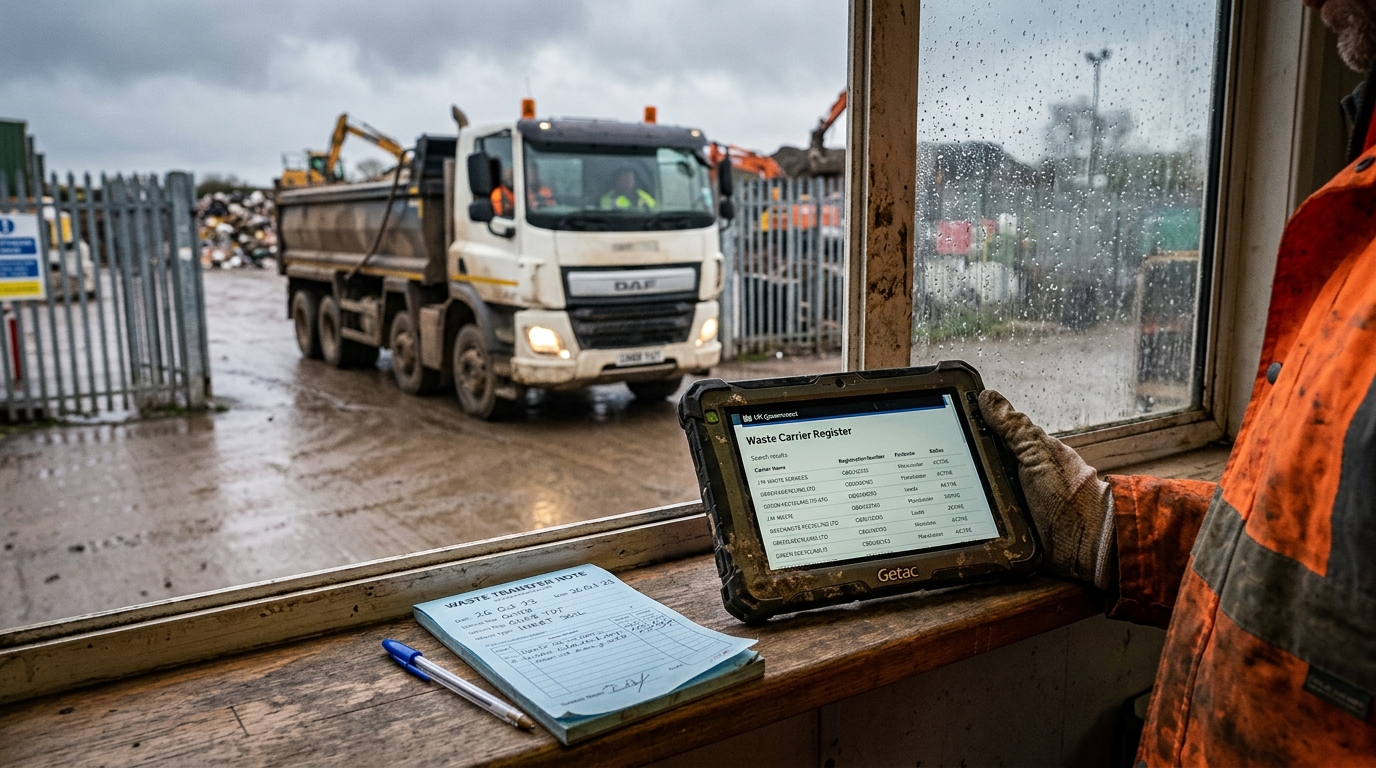
Every load that crosses your weighbridge carries a legal duty with it. Waste crime costs the UK economy an estimated £1bn each year (Environment Agency, 2026), and the duty of care is the law that makes each site in the chain accountable for the waste it handles. That duty sits under the Environmental Protection Act 1990. Section 34 requires anyone who keeps, treats or has control of waste to take reasonable steps to stop it escaping and to transfer it only to an authorised person (legislation.gov.uk, 1990).
For a permitted receiving site, that is not abstract law. It is the backbone under every waste transfer note, every EWC code and every Digital Waste Tracking record you produce. The EA can turn up and ask to see the evidence. Get it wrong and you are not just risking a fine, you are risking the permit. This checklist walks the duty through the way it actually happens on site: waste in, waste out, and the paperwork you have to keep.
Key takeaways
- The duty of care under s.34 EPA 1990 applies to anyone who keeps, treats or has control of waste, so it covers your receiving site directly (legislation.gov.uk, 1990).
- The Waste Duty of Care Code of Practice is statutory guidance and applies in England and Wales (gov.uk, 2018).
- You must transfer waste only to an authorised person, so check the waste-carrier public register for every collection, not just at onboarding (legislation.gov.uk, 1990).
- Keep waste transfer notes for 2 years (gov.uk) and hazardous waste consignment note records for 3 years (legislation.gov.uk, 2005).
- Digital Waste Tracking overlays the duty of care, it does not replace it, and becomes mandatory for receiving sites in England and Wales from 1 October 2026 (gov.uk, 2026).
What is the waste duty of care, and does it apply to my site?
Yes, it applies to your site, and it always has. The duty of care is set out in section 34 of the Environmental Protection Act 1990. It places a duty on anyone who imports, produces, carries, keeps, treats, disposes of or has control of waste to take "all such measures applicable to him in that capacity as are reasonable in the circumstances" (legislation.gov.uk, 1990). Because you keep, treat and control waste the moment a tipper backs onto your pad, the duty is squarely on you.
Section 34 spells out three practical obligations. You must prevent the escape of the waste from your control (legislation.gov.uk, 1990). You must ensure any onward transfer is only to an authorised person or for authorised transport purposes (legislation.gov.uk, 1990). And you must make sure a written description of the waste travels with it (legislation.gov.uk, 1990).
The detail lives in the Waste Duty of Care Code of Practice, which is issued under s.34 and applies to anyone who produces, carries, keeps, disposes of, treats, imports or has control of waste in England or Wales (gov.uk, 2018). Treat the Code as the standard the EA will measure you against.
Have you described the waste accurately and coded it correctly?
Start every transfer with an accurate written description and the correct EWC code. Section 34 requires a written description of the waste to be transferred so that the next holder can handle it lawfully (legislation.gov.uk, 1990). A vague line like "mixed metal" is not a description. It should name what the waste actually is, the process it came from, and anything that affects how it must be handled.
The EWC code is how that description becomes portable across the chain. Get the code wrong and everything downstream inherits the error, including your DWTS records. If your weighbridge operator is unsure whether a load is hazardous or how to classify a mixed skip, work it through before you sign, not after. For the mechanics of picking and checking codes, see our guide to reading and applying an EWC code.
Is the carrier an authorised person, and have you checked this collection?
Only transfer waste to an authorised person, and confirm it on the day. Section 34 makes it your duty to ensure any transfer is only to an authorised person or for authorised transport purposes (legislation.gov.uk, 1990). For a carrier taking waste off your site, that means a valid registration on the waste-carrier public register.
The register lets you find people or businesses registered as waste carriers, brokers or dealers, allowing them to transport, buy, sell or dispose of waste (Environment Agency). Check it for every collection, not just once when you set the account up. Registrations lapse and get revoked between visits. A one-off check at onboarding does not discharge a duty that lands fresh on every load. Record the check, so you can prove you did it.

Have you completed and signed a compliant transfer note?
Fill in and sign the correct note for every transfer. For non-hazardous waste that is a waste transfer note. Both parties must fill in the sections that apply to them and sign it (gov.uk). The note is where the written description, the EWC code and the carrier details come together as one signed record.
Where the waste is hazardous, you need a hazardous waste consignment note instead. The transfer note is not box-ticking, it is the primary evidence that the duty was met on that load. For how these notes function as duty-of-care evidence and where the paper version still bites, read do you still need paper waste transfer notes.
How long must you keep the paperwork?
Keep waste transfer notes for 2 years and hazardous waste consignment note records for 3 years. For a standard waste transfer note, gov.uk is explicit: keep a paper or electronic copy for 2 years (gov.uk). For hazardous waste, the records must be kept for 3 years after the date on which the waste is transferred to another person (legislation.gov.uk, 2005).
Source: waste transfer notes (gov.uk); hazardous waste consignment note records, reg 49(3) (legislation.gov.uk, 2005).
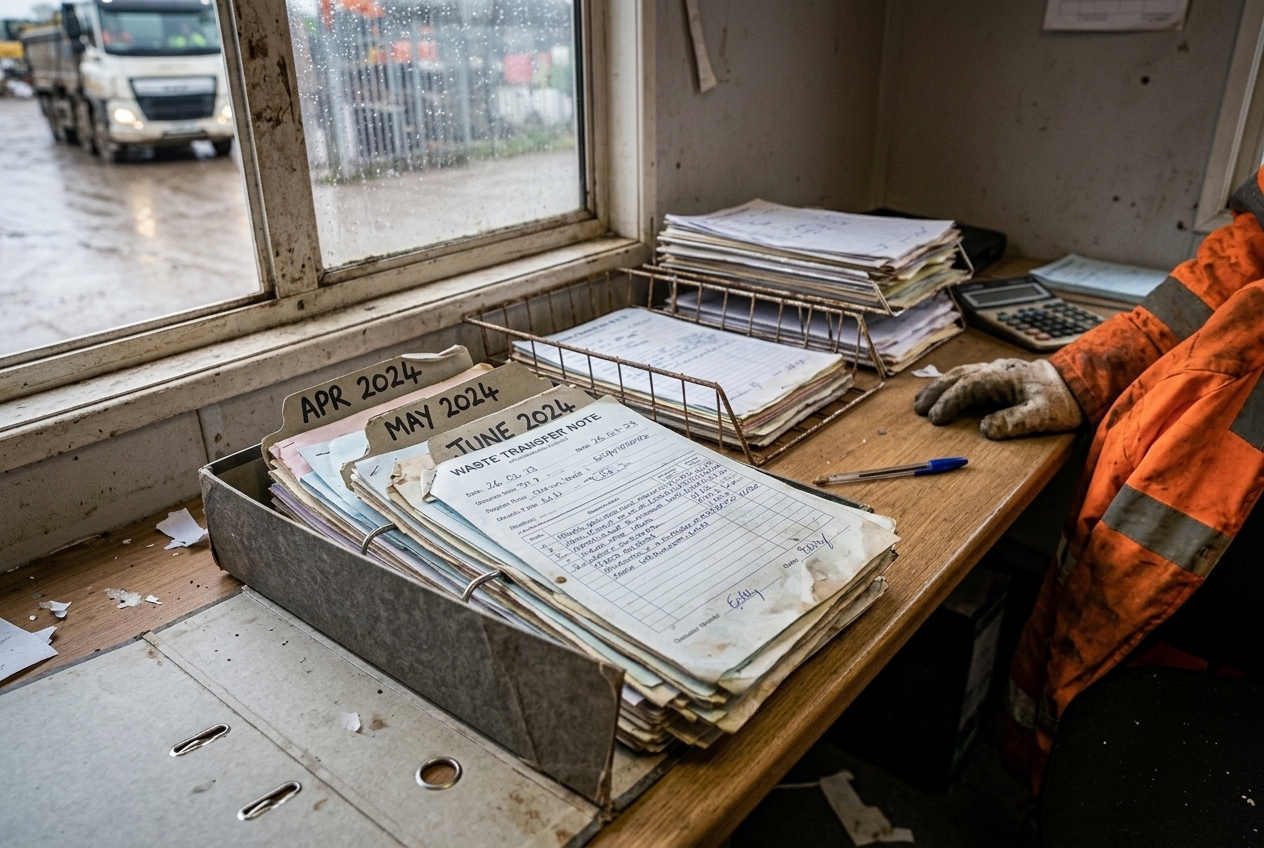
Store the two record types so the retention clock is obvious. If an inspector asks for a consignment note from two and a half years ago, you should be able to produce it.
Are you keeping the evidence of your duty-of-care checks?
Retain the evidence, not just the outcome. The duty is judged on what you can show, so keep the register-check evidence, the signed notes and the records together as proof for an EA inspection. The Code of Practice is the standard you will be held to, and it applies across England and Wales (gov.uk, 2018).
In practice that means a filed or logged record of each carrier check, the signed transfer or consignment note for each load, and your permit waste records, all findable by date. A duty done but not documented is very hard to defend when the EA is stood in your portacabin.
How does Digital Waste Tracking change your duty of care?
Digital Waste Tracking overlays the duty of care, it does not replace it. You must continue to complete waste transfer notes, Annex VII forms and hazardous waste consignment notes where required, and continue to submit waste returns in line with the conditions of your environmental permit (gov.uk, 2026). DWTS adds a reporting layer on top of the duty you already carry.
If you receive waste in England or Wales, you must use the service from 1 October 2026, and records must be submitted within 2 working days, starting on the day after you receive the waste (gov.uk, 2026). For receiving sites in Scotland and Northern Ireland, the service becomes mandatory from January 2027 (gov.uk, 2026). Software built for the weighbridge can capture the carrier check and the transfer-note data as the load is weighed, so the duty-of-care evidence is retained automatically. For a fuller picture of the scheme, see our overview of what Digital Waste Tracking is.
The duty of care checklist at a glance
- Confirm the duty applies to your site because you keep, treat or control the waste.
- Write an accurate description and apply the correct EWC code before you sign.
- Check the carrier on the public register for this collection, and record the check.
- Complete and sign the right note: waste transfer note, or hazardous waste consignment note.
- Keep waste transfer notes for 2 years and hazardous waste consignment note records for 3 years.
- File the evidence of every check so you can produce it at an EA inspection.
- Keep completing your notes and permit returns, and report through DWTS on time.
Frequently asked questions
What is the waste duty of care in simple terms? It is the legal requirement under s.34 EPA 1990 to handle waste responsibly, prevent it escaping your control, transfer it only to an authorised person and make sure a written description travels with it (legislation.gov.uk, 1990).
Does the duty of care apply to a receiving site or only the producer? It applies to your receiving site. The duty falls on anyone who keeps, treats or has control of waste, which is exactly what you do once a load is tipped on your pad (legislation.gov.uk, 1990).
Is the Waste Duty of Care Code of Practice legally binding? It is statutory guidance issued under s.34 and applies in England and Wales, and the EA will use it as the standard you are measured against (gov.uk, 2018).
How do I check a waste carrier licence? Use the waste-carrier public register, which lets you find businesses registered as carriers, brokers or dealers (Environment Agency). Check it for every collection, not just at onboarding.
Who is an authorised person for waste? Broadly, someone entitled to take the waste, such as a registered waste carrier. Section 34 requires that you transfer waste only to an authorised person or for authorised transport purposes (legislation.gov.uk, 1990).
Who signs the waste transfer note? Both parties. Each must fill in the sections that apply to them and sign the note (gov.uk).
How long do I keep waste transfer notes? Keep a paper or electronic copy for 2 years (gov.uk).
How long do I keep hazardous waste consignment note records? For 3 years after the date on which the waste is transferred to another person (legislation.gov.uk, 2005).
Does Digital Waste Tracking replace waste transfer notes? No. You must continue to complete waste transfer notes, Annex VII forms and hazardous waste consignment notes where required, and keep submitting your permit waste returns (gov.uk, 2026).
When does DWTS become mandatory for my receiving site? From 1 October 2026 if you receive waste in England or Wales (gov.uk, 2026), and from January 2027 for receiving sites in Scotland and Northern Ireland (gov.uk, 2026).