Paper vs Defra Spreadsheet vs Software: DWTS Recording Options for UK Waste Sites 2026
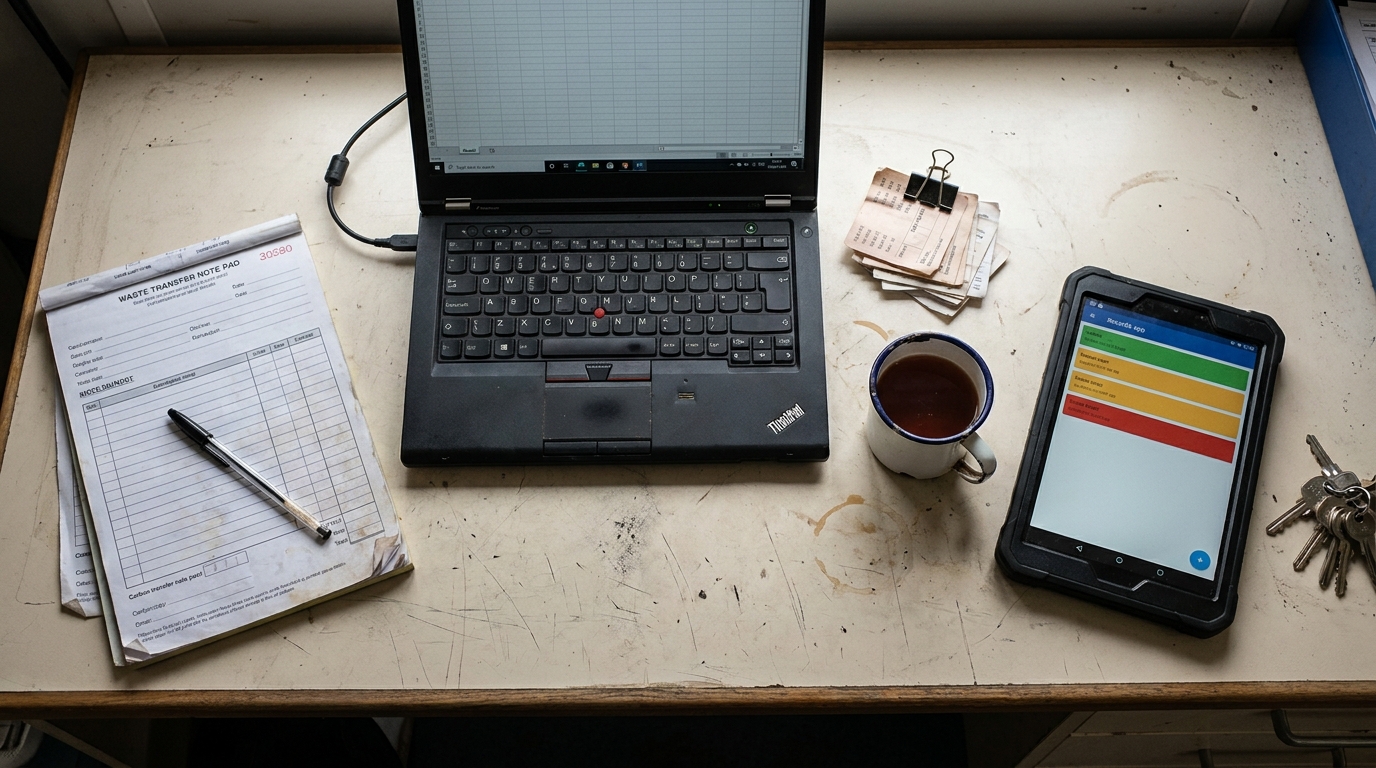
The mandate is live. From 1 October 2026, every permitted waste-receiving site in England and Wales has to get each load it takes in onto the Defra system, and the clock is tight: you have 2 working days from the day after the waste arrives (GOV.UK, 2026). Miss that window on a busy gate and the backlog builds fast.
So the real question in the portacabin is not whether to record loads. It is how. Do you use the free Defra spreadsheet, carry on scribbling tickets at the gate and key them in later, or run connected software that files the record as Steve weighs the lorry? This piece walks the three routes for digital waste tracking in plain terms, so you can pick the one that fits your site.
Key takeaways
- There are only two routes that reach Defra: a spreadsheet upload, or connected software through an API. There is no paper submission route (GOV.UK, 2026).
- "Staying on paper" is not a third route. It is paper capture at the gate, then manual typing into the Defra spreadsheet later, extra handling bolted onto the spreadsheet route.
- Every received load must be submitted within 2 working days, starting the day after you receive it (GOV.UK, 2026).
- The Defra spreadsheet is a temporary route, expected to stay in place until at least October 2027 (GOV.UK, 2026).
- England and Wales start 1 October 2026; Northern Ireland and Scotland start January 2027 (GOV.UK, 2026).
- Phase 1 covers around 12,000 permitted waste-receiving sites, so if you hold a permit to take waste in, you are almost certainly in scope (Defra, 2026).
What are your DWTS recording options?
Only two routes get a record into Defra: upload a spreadsheet, or report through connected software using an API (GOV.UK, 2026). That is the whole picture. There is no paper submission channel.
This matters because many operators assume paper is still an option in its own right. It is not. If you capture loads on paper tickets at the gate, you still have to type every one of those tickets into the Defra spreadsheet before the deadline. Paper is a front end, not a route to Defra. So the honest comparison is three ways of working, two of which end at the same spreadsheet.
| Route | How the record reaches Defra | Best suited to | Main downside | Cost |
|---|---|---|---|---|
| Paper-first, then manual entry | Keyed by hand into the Defra spreadsheet, then uploaded | Sites that already run gate tickets and are not ready to change the gate process | Double-handling every load; lost tickets; still bound by the 2-working-day clock | Free spreadsheet, plus your staff time |
| Defra spreadsheet (direct) | Typed straight into the spreadsheet, then uploaded | Low-volume sites with a handful of loads a day | Flattening a nested record into flat rows gets hard at volume | Free |
| Connected software (API) | Filed automatically as the load is weighed | Steady daily lorries, multiple sites, hazardous consignments | A subscription cost | Paid software |
Who is actually in scope? If you are licensed or permitted to receive controlled waste, you need to enter details of every load you receive (GOV.UK, 2026). Phase 1 is permitted waste-receiving sites only. Carriers, brokers, dealers and exemption holders come later, and producers are not in Phase 1 at all.
Is the free Defra spreadsheet good enough for your site?
For a low-volume site, yes, the free Defra spreadsheet can be good enough. Defra provides it as an alternative way to submit data for waste receivers, and it costs nothing to use (GOV.UK, 2026).
There is a catch worth knowing before you build your whole process around it. The spreadsheet is temporary. Defra describes it as a temporary route expected to remain in place until at least October 2027 (GOV.UK, 2026). So it is a bridge, not a permanent home.
The other catch is the shape of the data. A waste record is naturally nested: one load, with movements, codes and parties hanging off it. A spreadsheet has to flatten all of that into flat rows and columns. At a few loads a day that is manageable. At volume it gets fiddly, and that is where errors creep in, deadlines slip, and the same load ends up recorded two slightly different ways.
What does staying on paper really cost you?
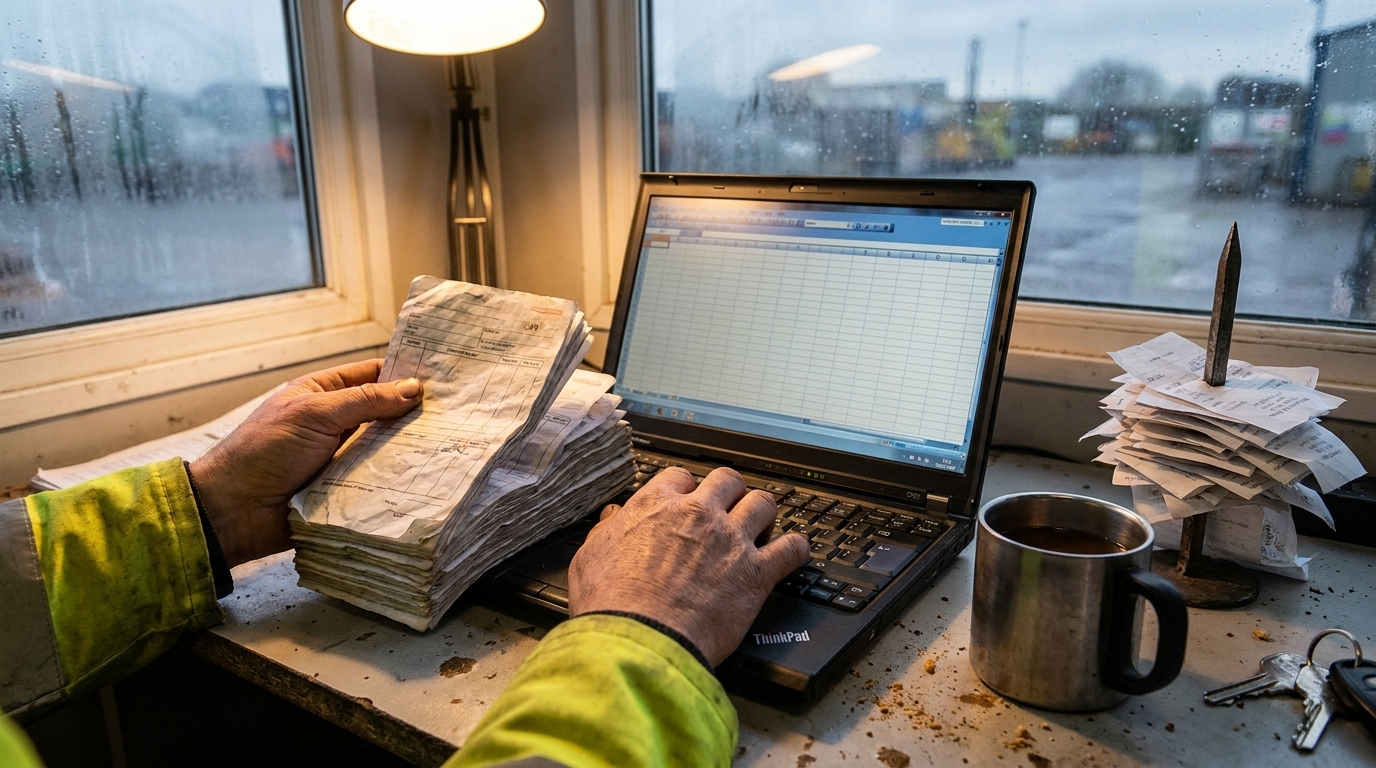
Staying on paper costs you the record twice. You write the ticket at the gate, then someone types the same details into the Defra spreadsheet later. Every load is handled twice, and that second pass usually lands at the end of a long day, on whoever can be spared, which is rarely the right person.
The 2-working-day clock does not care that you are on paper. You still have to submit each load within 2 working days, starting the day after it arrives, and you need the unique reference number back inside that window (GOV.UK, 2026). A ticket that sits in a tray over a bank holiday weekend can quietly blow the deadline.
Then there are the tickets that never make it off the gate: rained on, blown under the weighbridge, pocketed and forgotten. Paper also does nothing to tidy up your paper waste transfer notes obligations, which sit alongside this, not instead of it.
When does connected software pay off?
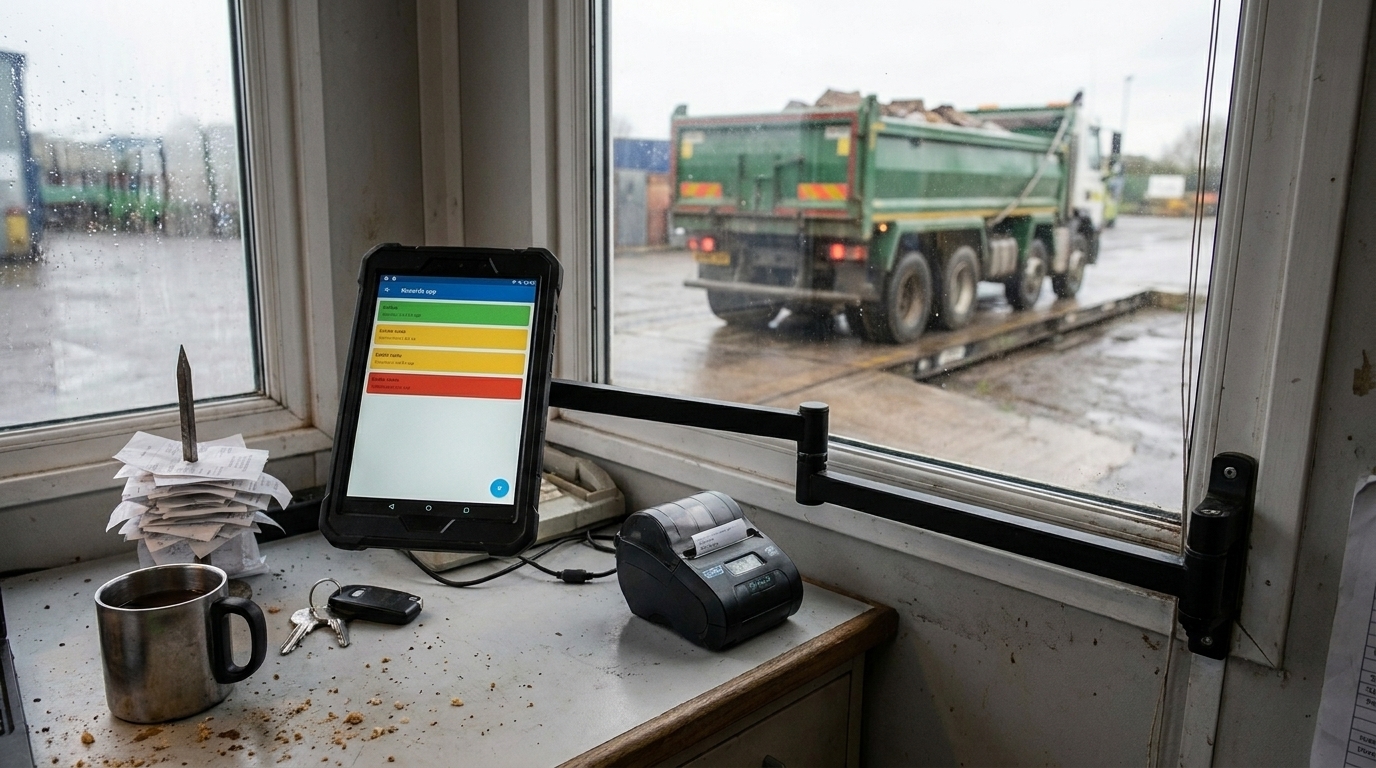
Connected software pays off when volume makes manual entry a daily chore. The API files the record as the load is weighed, so there is no second keying step and no backlog waiting for someone to clear it. Software built for the weighbridge can file the receipt to Defra as the load is weighed, turning Steve's normal weigh-in into the compliance record itself.
The gain grows with volume. A site taking steady daily lorries, running more than one site, or handling hazardous consignments has far more loads to track and far more chances to miss a deadline. Filing at the point of weighing removes the gap where records go missing. It is worth getting your weighbridge workflow ready early so the software fits how the gate already works, rather than bolting a new step on top.
Fewer missed 2-working-day deadlines is the practical payoff. The record exists the moment the lorry leaves.
How do you choose the right route for your site?
Choose by volume. The honest test is how many loads cross your weighbridge on a normal day and how much variety you handle.
A handful of loads a day, one site, straightforward waste streams: the free Defra spreadsheet may be all you need, at least while it remains available. You can type a few loads a day without it becoming a job in itself.
Steady daily lorries, multiple sites, or hazardous consignments with their extra detail: connected software earns its keep. The entry work would otherwise eat real staff time, and the risk of a missed deadline rises with every load you add. Operators are using all three routes today, so there is no single right answer, only the one that matches your gate. Run through a DWTS readiness checklist against your actual load numbers before you commit, rather than guessing.
What will each route cost?
Every route carries the same system fee, then they diverge on tooling. There is a £26 digital waste tracking system fee, payable when the obligation first arises and then on each anniversary (The Digital Waste Tracking (England) Regulations 2026, 2026). That applies whichever route you pick, so it is not a deciding factor.
The real difference is tooling. The Defra spreadsheet is free, so your only cost there is staff time keying loads in. Software is a subscription, in the same monthly bracket as the vehicle telematics or yard kit you already pay for, traded against the staff hours you stop spending on manual entry and the missed deadlines you avoid. A full cost breakdown deserves its own piece; the short version is that the spreadsheet is cheapest in pounds and software is cheapest in time.
Frequently asked questions
Can I still submit waste records to Defra on paper?
No. There is no paper submission route to Defra. The only two routes are a spreadsheet upload or connected software through an API (GOV.UK, 2026). You can still write tickets at the gate, but someone has to key them into the spreadsheet afterwards.
Is the Defra spreadsheet free, and is it enough?
Yes, the Defra spreadsheet is free, and for a low-volume site it can be enough. Defra provides it as an alternative way for waste receivers to submit data (GOV.UK, 2026). The limit shows at volume, where flattening a nested record into flat rows gets hard to manage.
How long will the spreadsheet route last?
The spreadsheet is a temporary route, expected to remain in place until at least October 2027 (GOV.UK, 2026). Plan on the basis that it is a bridge rather than a permanent arrangement.
Do I need software for digital waste tracking?
No, software is not required. You can meet the obligation with the free Defra spreadsheet (GOV.UK, 2026). Software earns its keep at higher volume, where filing the record as the load is weighed saves staff time and cuts missed deadlines.
How quickly must I submit each load?
Within 2 working days, starting the day after you receive the waste (GOV.UK, 2026). Waste received at 9am on a Monday must be submitted, with a unique reference number received, by 11:59pm on the Wednesday.
What happens if I miss the 2-working-day deadline?
Correct and submit the record as soon as you can, and aim to work inside the window so it does not happen again. The duty is to enter details of every load you receive within the 2-working-day limit (GOV.UK, 2026). Treat a near miss as a prompt to tighten your gate process.
When do Scotland and Northern Ireland start?
Both start January 2027. England and Wales begin on 1 October 2026, with Northern Ireland and Scotland following in January 2027 (GOV.UK, 2026).
Does this apply to my small site, and how many sites are affected?
Yes, if you hold a permit or licence to receive controlled waste, you need to enter details of every load you receive (GOV.UK, 2026). Phase 1 covers around 12,000 permitted waste-receiving sites (Defra, 2026). Size is not the test; holding a permit to receive waste is.
Is there a fee?
Yes. There is a £26 digital waste tracking system fee, payable when the obligation first arises and then on each anniversary (The Digital Waste Tracking (England) Regulations 2026, 2026). It applies whichever recording route you choose.
Which route is best for a low-volume site?
The free Defra spreadsheet is usually the best fit for a low-volume site, at least while it remains available (GOV.UK, 2026). A handful of loads a day can be typed in directly without needing software.
Do carriers and producers have to report in Phase 1?
No. Phase 1 applies to permitted and licensed waste-receiving sites only (GOV.UK, 2026). Carriers, brokers, dealers and exemption holders come later, and producers are not in Phase 1.