How to Pick the Right EWC Code at the Weighbridge
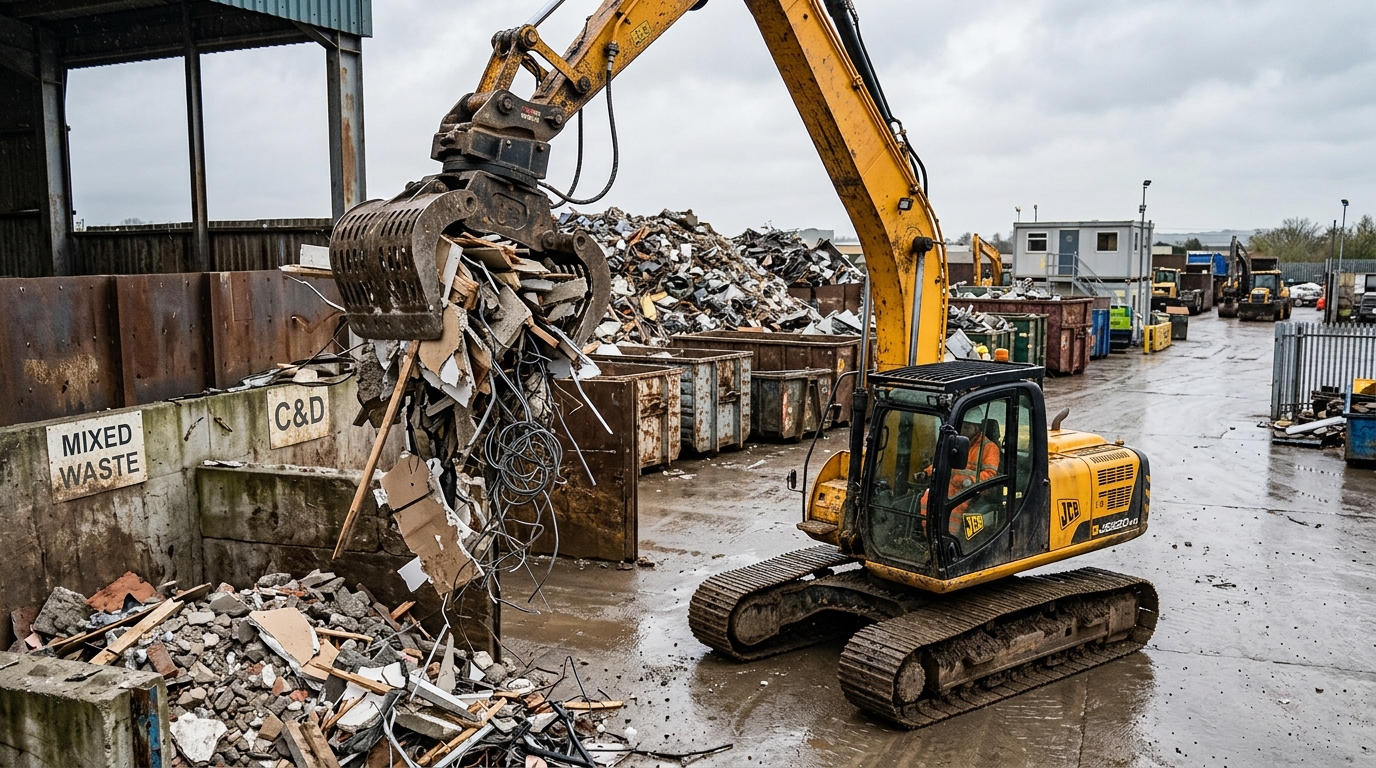
It is 08:30, three tippers are queued on the approach, and your operator has a driver at the window wanting his ticket. On the back of the next lorry is a mixed load - some rubble, some timber, a coil of cable, a bit of plasterboard. Before that lorry moves off the plate, someone has to put a six-digit code against it. Get it right and it is a two-second job. Get it wrong and, from 1 October 2026, it is a wrong entry in a record you have to file digitally.
From that date, every permitted site that receives waste in England or Wales must log each load in the Digital Waste Tracking service: "If you are licensed or permitted to receive controlled waste, you will need to enter details of every load you receive using the 'Report receipt of waste' service" (GOV.UK, 2026). You "must submit records within 2 working days" (GOV.UK, 2026), and the waste classification code is one of the fields you submit (GOV.UK, 2026). Scotland and Northern Ireland follow in January 2027 (GOV.UK, 2026).
So the code your operator picks at the gate is no longer a scribble nobody reads. Here is the step-by-step way to get it right at the weighbridge, first time.
Key takeaways
- From 1 October 2026, permitted sites receiving waste in England and Wales must file every load digitally, and the classification code is a required field (GOV.UK, 2026).
- Pick the code from where the waste came from, working down the List of Waste: chapter, then sub-chapter, then the specific entry (NetRegs).
- An asterisk (*) means the waste is hazardous - there is no cheaper option (NetRegs).
- A mirror entry cannot be coded until you assess its hazardous properties - "a list of waste code cannot be assigned until steps 4 to 7 have been completed" (Environment Agency, WM3, 2021).
- You can only accept waste your environmental permit lists by code (GOV.UK, 2022).
How do you pick the right EWC code at the weighbridge?
Start from where the waste came from, not what it looks like, then work down the List of Waste until you hit the specific entry - and check whether that entry is hazardous. The code is built from the List of Waste chapters, so you read it top-down, not by hunting for a description that sounds close.
The six digits tell you exactly how to work: "The first two digits are the chapter", "the next two are the sub-chapter" and "the last two are the specific to the waste type" (NetRegs). So the job at the gate is to place the load in the right chapter first, then narrow down.
The full walk-through of the six digits and the asterisk sits in our guide to what an EWC code is. At the gate, the discipline is the order: source, chapter, sub-chapter, entry, then the hazardous check. Skip to a code that "sounds right" and you are guessing.
Which EWC codes are you allowed to accept?
Only the ones your environmental permit lists. Your permit is not just a licence to trade - it names the exact waste types you are allowed to take in, by their six-digit code. A standard rules transfer-station permit puts it plainly: "Waste shall only be accepted at the site if all the following apply: (a) it is of a type and quantity listed in this rule and Table 2.3" (GOV.UK, 2022), and Table 2.3 is a list of permitted EWC codes. Anything not on that table has to be rejected.
That makes the gate decision simpler than it feels. You are not classifying against the whole List of Waste - you are matching the load to the shortlist your permit already allows. So the single best preparation is to laminate your permit's waste-types table, print it big, and keep it where your operator can see it.
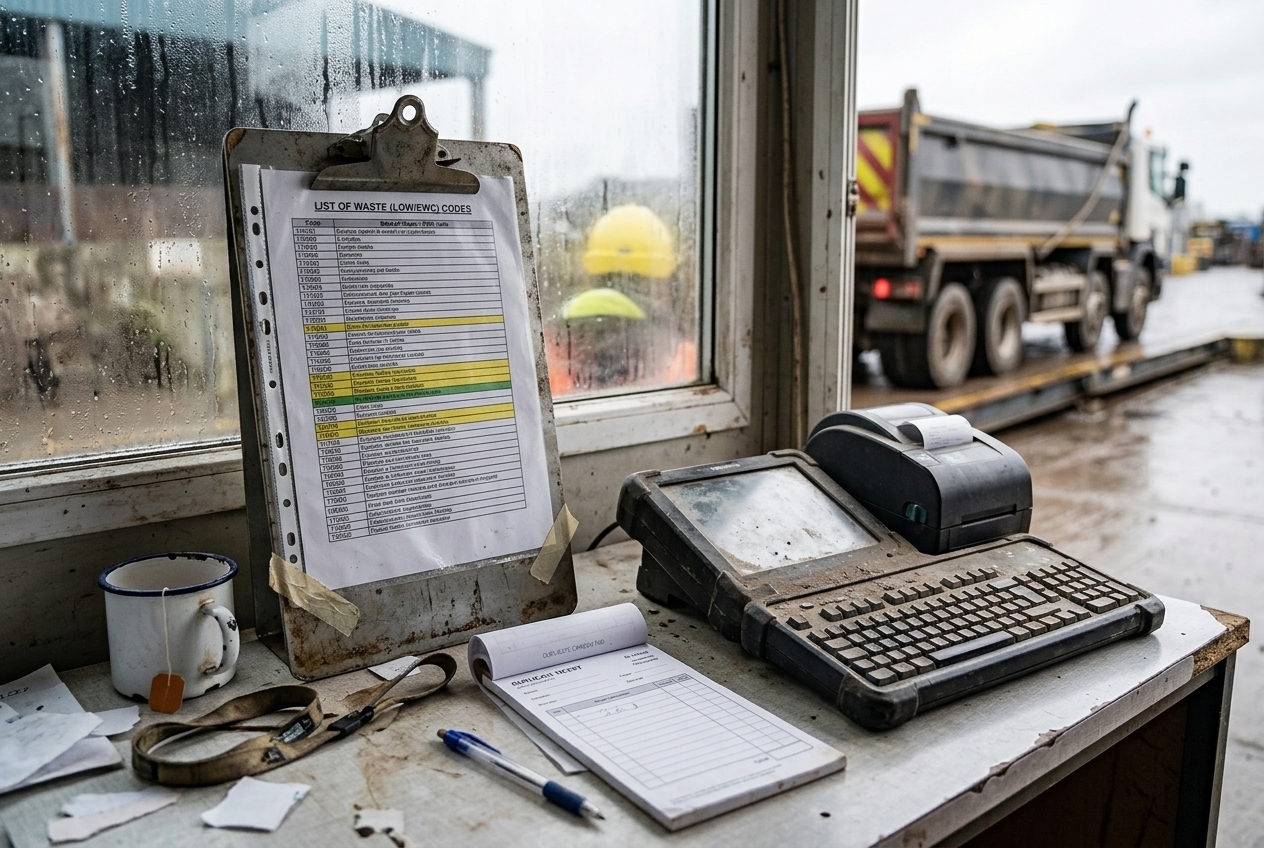
If the load in front of your operator does not fit any code on that sheet, that is the signal to stop and query it - not to reach for the nearest code so the queue keeps moving.
What do you do when two codes could apply?
Stop, do not guess, and assess it - because that is a mirror entry, and you are not allowed to code it on sight. Some wastes are listed as a pair: one code with an asterisk (hazardous), one without. The Environment Agency's WM3 guidance is blunt about the duty this creates: "If the waste is classified under 'mirror hazardous' or 'mirror non-hazardous' entries you will need to continue with the assessment of hazardous properties in steps 4 to 7", and "a list of waste code cannot be assigned until steps 4 to 7 have been completed" (Environment Agency, WM3, 2021).
An asterisk is not optional. Hazardous "wastes are identified using an asterisk (*)" (NetRegs), and an absolute-hazardous entry is hazardous whatever the chemistry - you do not drop the asterisk to duck a gate fee. Where the composition genuinely cannot be worked out, the safe default is the hazardous side, not the cheaper one.
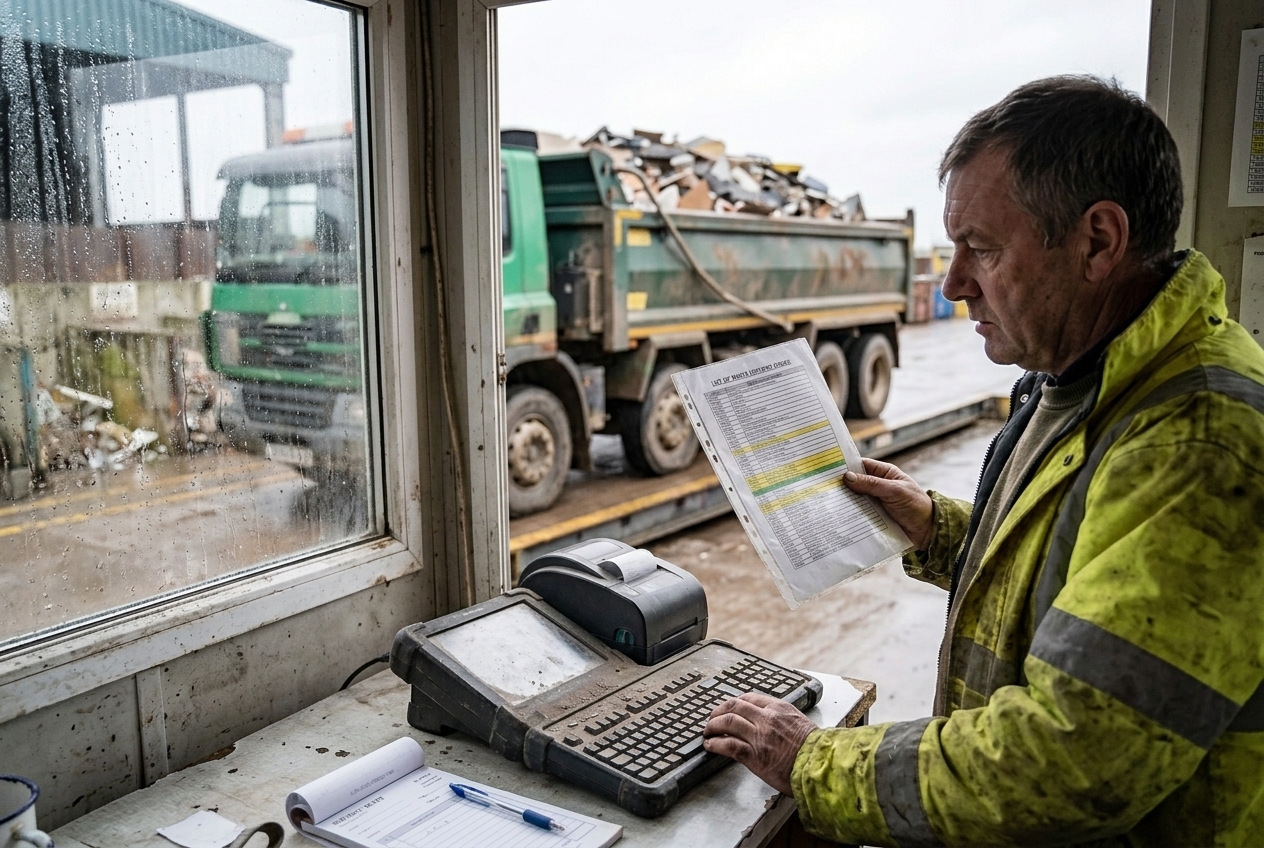
In practice, a mirror entry is the load your operator sends to the quarantine bay rather than codes on the spot - contaminated soil, mixed oils, a drum with no paperwork. It waits for an assessment. Guessing the non-hazardous side to save the fee is the classic error, and the one most likely to unravel at an inspection - it is high on our list of the most common EWC code mistakes.
What if the load does not match the ticket?
Trust the load, not the paperwork - once you accept it, the code is yours to stand behind. A code that was right for the producer's process is not automatically right for what actually turned up. Contamination, mixing in the skip, or a description that never matched the contents all break the chain. The duty of care makes the description your problem the moment you sign for it: "A written description of the waste is agreed and signed by you and the next holder", and it must classify the waste "by using the appropriate codes" (GOV.UK, 2018).
If the grab tells a different story from the ticket, the ticket is wrong - fix it before you sign, not after. And the stakes are not trivial: failing the duty of care "is an offence with no upper limit on the courts' power to fine" (GOV.UK, 2018). Checking the load against the description at the gate is also a line item on any duty of care checklist for a permitted site.
Can you use a 99 code to keep the queue moving?
No - a 99 code is a last resort, not a shortcut for a busy gate. Codes ending in 99 mean "wastes not otherwise specified", and WM3 tells you not to jump to them: "You must not use any six digit entry ending in '99' from the chapters considered at step 1 because more appropriate entries might be found in other chapters" (Environment Agency, WM3, 2021).
Work through the chapters first - source, sub-chapter, specific entry - and only fall back on a 99 code when nothing specific fits anywhere. A yard that codes everything awkward as 99 is a yard that will get questions on its next visit. The time to slow down is now, before the digital record makes every 99 visible.
What happens if you get the code wrong under Digital Waste Tracking?
The wrong code is now a logged, checkable field rather than a scribble - so a slip that used to go unnoticed becomes a data point. You must classify waste "before it is collected, disposed of or recovered" (GOV.UK), and under Digital Waste Tracking that classification code is submitted on every receipt (GOV.UK, 2026). The Environment Agency has proposed a £1,000 fixed monetary penalty aimed at "unintended or accidental administrative breaches" of the new regime - a proposal still under consultation, not yet in force (letsrecycle, 2026).
The paper has not gone away either. In Phase 1 you still complete the paper transfer note alongside the digital receipt, so the same code has to match on both. The fix is to agree the code once, at the weighbridge, and carry it straight through. Software built for the weighbridge can record the code as the load is weighed and file it under Digital Waste Tracking without re-keying - which is the wider point of getting your weighbridge workflow ready for DWTS: the code needs to be right once, at the gate, not fixed up at month end.
Frequently asked questions
How do you choose the right EWC code?
Work top-down: identify the source or process that produced the waste, go to that chapter, narrow to the sub-chapter, then match the specific entry against its printed description (NetRegs). Finish by checking whether the entry is hazardous.
What are the first two digits of an EWC code?
The chapter - broadly the industry or process the waste came from. "The first two digits are the chapter", the middle two are the sub-chapter, and the last two are the specific waste type (NetRegs).
Which EWC codes can my site accept?
Only the codes listed in your environmental permit. A standard rules permit states that "waste shall only be accepted at the site if" it "is of a type and quantity listed" in the permit's waste-types table (GOV.UK, 2022).
What is a mirror entry and how do I code it?
A waste listed as a pair - one code hazardous, one not. You cannot assign the code on sight: "a list of waste code cannot be assigned until steps 4 to 7 have been completed", the hazardous-properties assessment (Environment Agency, WM3, 2021).
What does the asterisk on an EWC code mean?
It marks the waste as hazardous. Hazardous "wastes are identified using an asterisk (*)", and you cannot drop it to reduce the cost or paperwork (NetRegs).
Can I use a 99 code if I am not sure?
Only as a last resort. WM3 says "you must not use any six digit entry ending in '99'" from the first chapters considered "because more appropriate entries might be found in other chapters" (Environment Agency, WM3, 2021).
Who is responsible if the code is wrong - me or the producer?
You, once you accept the load and sign the description. The written description is "agreed and signed by you and the next holder" and must use the appropriate codes (GOV.UK, 2018).
Does the EWC code have to match on the paper note and the digital record?
Yes. The classification code is a required field in the digital receipt (GOV.UK, 2026), and in Phase 1 the paper transfer note still runs alongside it, so both must carry the same code.
When do I have to submit the code digitally?
Within two working days. Sites receiving waste in England or Wales "must submit records within 2 working days (excluding weekends and bank holidays), starting on the day after you receive the waste" (GOV.UK, 2026).
What is the penalty for getting a code wrong?
Breaching the duty of care "is an offence with no upper limit on the courts' power to fine" (GOV.UK, 2018). Separately, a £1,000 fixed monetary penalty has been proposed for accidental administrative Digital Waste Tracking breaches (letsrecycle, 2026).